
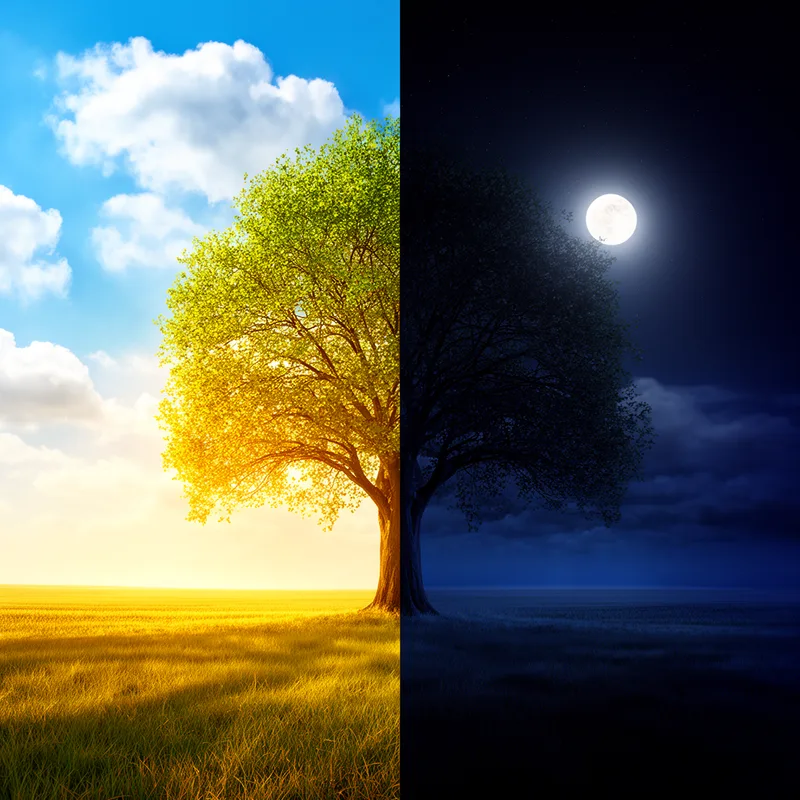
equinox
 15
7.4
15
7.4

- noun
- /ˈɛkwɪnɒks/
- On the day of the equinox, daylight and darkness are almost equal in length.
- autumnal equinox
- spring equinox
- vernal equinox
Loading YouTube…
Watch on YouTubeNow, three months after that, at the spring, the spring equinox, it'll be like this again.
- Now, three months after that, at the spring, the spring equinox, it'll be like this again.
- It depends on the what's called the first full moon after the spring equinox.
- And it was right around the time of the, the June equinox, I think it was the day before the longest day of the year.
- And then Bryce gets a little mental phone call from Napoleon because it's the autumnal equinox and so the veil is thin.
Examples
-
It's always the first full moon after the spring equinox.
-
By the spring equinox, the diffuse quality would disappear and brightness would take its place.
Fiction book (1995) -
In January, the days will get longer; in March, the equinox will come, and the ice will break up.
Fiction book (1997) -
The leaves are turning on the island as we head to the equinox this week.
Blog text (10) -
Instead, it does so during the fall equinox on September 22, several weeks after the end of the summer tourist season.
Academic text (2003) -
And these two are the equinoxes where day and night are of equal length.
-
Now, three months after that, at the spring, the spring equinox, it'll be like this again.
-
However, they did not celebrate the resurrection of the Sun until the spring equinox, or Easter.
-
Several years ago at the spring equinox, Victoria's coven put on a large public circle.
Fiction book (1997) -
The ancient Egyptians along with cultures long before them recognized that approximately every 2150 years, the sunrise on the morning of the spring equinox would occur at a different sign of the Zodiac.
Synonyms
 1
4.3
1
4.3
A time in early spring when day and night are about the same length, around March 21 in the north
 1
7.4
1
7.4
The time in autumn when day and night are about equal
 1
7.3
1
7.3
The March day when day and night are nearly equal and spring begins in the north
 1
6.1
1
6.1
A time when day and night are about the same length that marks the start of autumn
The time around March 20 when day and night are nearly equal and spring begins in the Northern Hemisphere
A time in late September when day and night are about equal, marking autumn north and spring south

The time when day and night are almost the same length, marking the start of autumn in the Northern Hemisphere
Compounds
1
4.3
A time in early spring when day and night are about the same length, around March 21 in the north
1
6.1
A time when day and night are about the same length that marks the start of autumn
1
7.3
The March day when day and night are nearly equal and spring begins in the north
- US
The time when day and night are almost the same length, marking the start of autumn in the Northern Hemisphere
The time around March 20 when day and night are nearly equal and spring begins in the Northern Hemisphere
- Specialized
A time in late September when day and night are about equal, marking autumn north and spring south
Surface Forms
Etymology
Equinox comes from the Latin words aequus ('equal') and nox ('night'), so it means 'equal night', which is a handy way to remember that at an equinox day and night are about the same length.