
equinoctial
- noun
- /ˌɛkwɪˈnɒkʃəl/
- Specialized
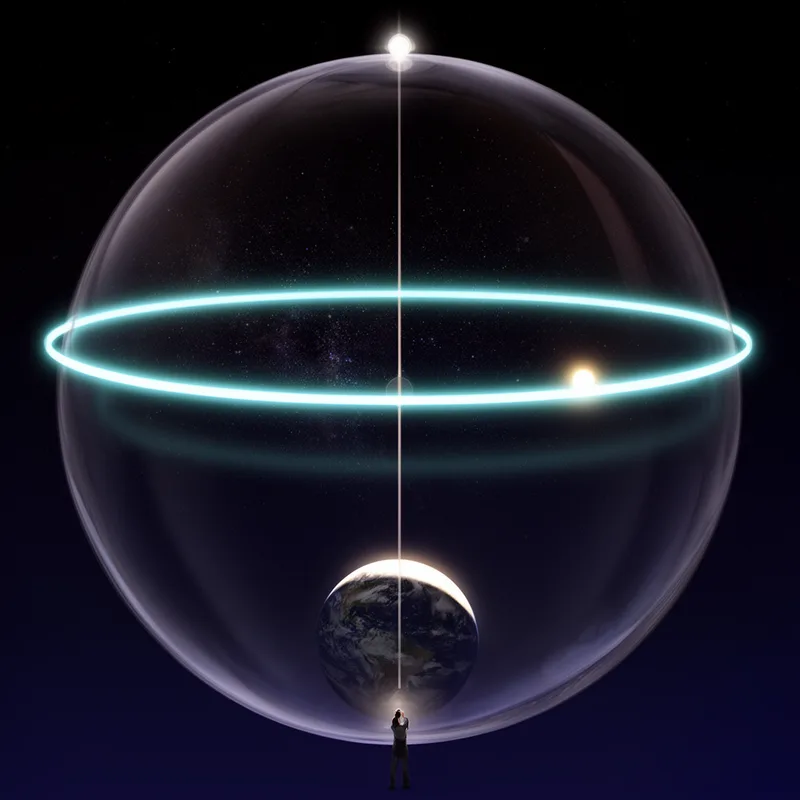
- In astronomy classes, we learn about the equinoctial line that divides the northern and southern celestial hemispheres.
Examples
-
Ancient astronomers mapped the equinoctial to chart the movement of the stars.
-
Many star charts prominently display the equinoctial as a reference point.
-
The sun crosses the equinoctial twice a year at the equinoxes.
-
The sun crosses the equinoctial at noon.
-
The equinoctial marks the celestial equator.
-
The equinoctial regions experience minimal variation in day length throughout the year.
-
Understanding the equinoctial helps astronomers track celestial movements more accurately.
Synonyms


 1
8.5
1
8.5
An imaginary circle around the sky above Earth's equator

An imaginary circle across the sky midway between the north and south poles

An imaginary line in the sky that matches Earth's equator and divides the sky into north and south
Compounds
- Specialized
An imaginary circle across the sky midway between the north and south poles
- Specialized
An imaginary line in the sky that matches Earth's equator and divides the sky into north and south

- Specialized
A point in the sky where the Sun crosses the Earth's equator at spring or autumn equinox

- Specialized
The time Earth takes to go from one spring equinox to the next, about 365.24 days
Surface Forms
Etymology
Equinoctial names the big circle in the sky halfway between the North and South poles, and the word comes from Latin aequus 'equal' and nox 'night'. This circle was called the 'equinoctial' because the sun crosses it at the times when day and night are equal.