
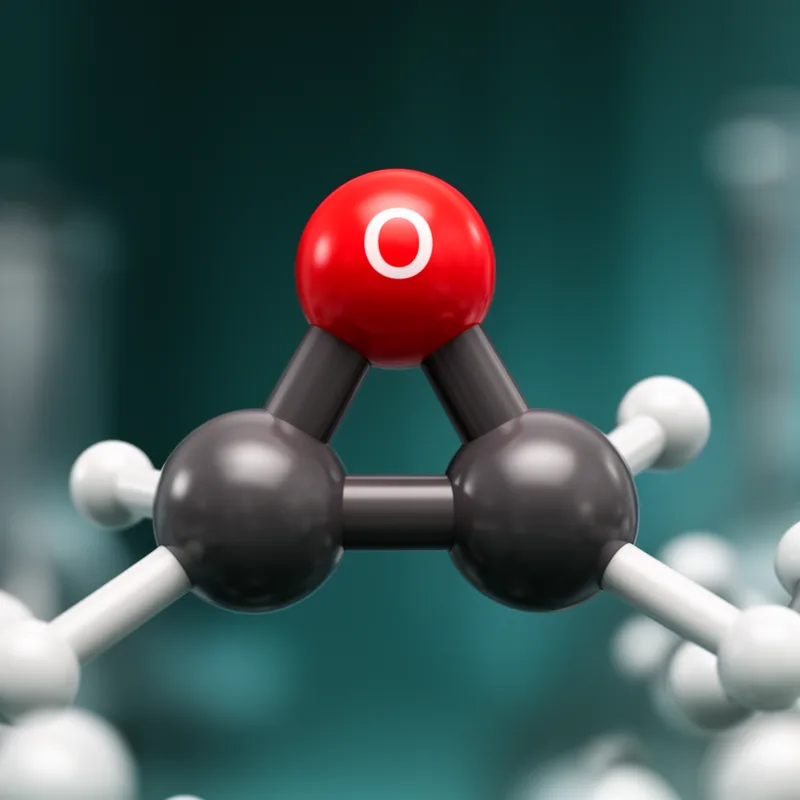
epoxide


 1
8.4
- noun
- /ɪˈpɒksaɪd/
- Specialized
- Heptachlor epoxide, the breakdown product of heptachlor, occurred in 12 percent of the samples, with an average level of 0.01 ppm and a maximum of 0.28 ppm.
- heptachlor epoxide
Examples
-
Schlordanes is the sum of the concentrations of heptachlor, heptachlor epoxide, cis-chlordane, trans-chlordane, trans-nonachlor, cis-nonachlor, oxychlordane, and nonachlor III.
Academic text (2000) -
Well, ordinarily when you make glue... first you need to thermoset your resin... and then after it cools you mix in a, um, epoxide.
-
OK, so we do that and now we formed the epoxide, right.
-
Any reactions that give epoxides, they come by adding oxygen to an alkene.
-
Heptachlor was more than 10 times more abundant than its breakdown product, heptachlor-epoxide.
Academic text (1993) -
In 2010, his group reported unexpected associations between type 2 diabetes and environmental exposures to heptachlor epoxide and ?-tocopherol.
Academic text (2012) -
Heptachlor and its breakdown product, heptachlor epoxide, occurred in 44 percent and 12 percent of the samples, with mean values of 0.12 ppm and 0.01 ppm, respectively.
Academic text (1993) -
In the lab, the chemist synthesized an epoxide by adding a reagent to the alkene, resulting in a three-membered ring structure.
-
Researchers discovered that the epoxide formed during the reaction was crucial for the binding process in the study of drug interactions.
-
To create new materials, scientists often explore various epoxides because their unique structure allows them to link with different polymers.
Surface Forms
Morphology
Etymology
Epoxide comes from the beginning part epi- meaning 'on' and oxide meaning a compound with 'oxygen'. Think of an epoxide as 'oxygen on' a very small ring of two carbon atoms, like the reactive part in epoxy glue, which explains why epoxides are small rings that react easily.