
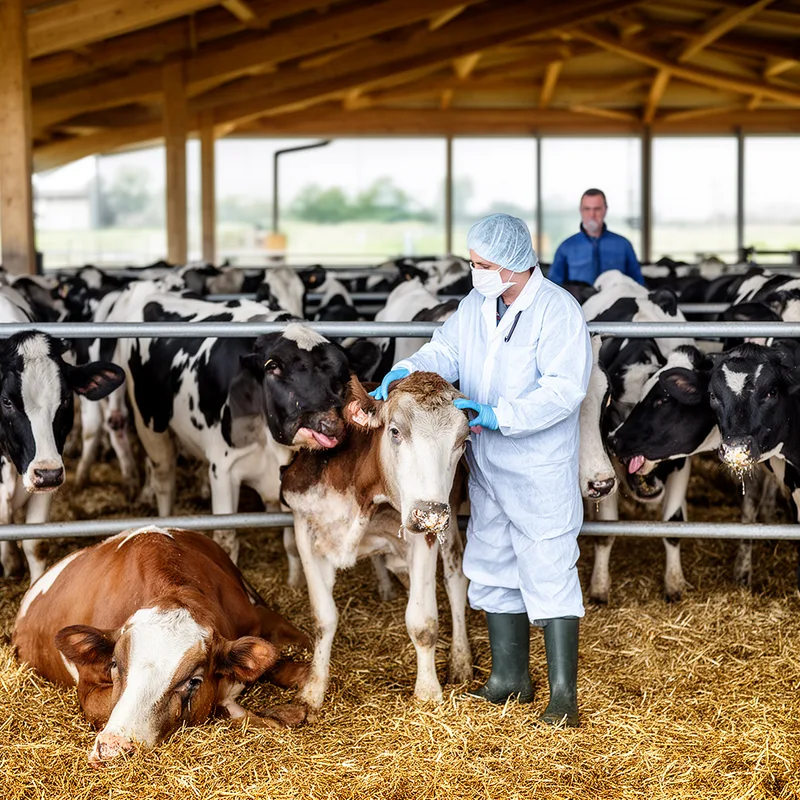
epizootic disease
- noun
- /ˌɛpɪzuˈɑtɪk dɪˈziːz/
- Specialized
- The epizootic disease spread rapidly through the deer population, causing many deaths among the animals.
Examples
-
During the same period, populations of the European fiat oyster, Ostrea edulis, were also affected severely by epizootic disease (Comps, 1970; Comps et al., 1980).
Academic text (1992) -
The black-footed ferret is not unique; most of Earth's biodiversity exists in habitats that are sensitive to epizootic disease outbreaks and drastic shifts in human social and political structure.
Academic text (1997) -
Farmers took precautions to protect their livestock from the threat of epizootic disease outbreaks.
-
Scientists studied the impact of the recent epizootic disease on the local bird species and their habitats.
How Widespread
- Specialized

- Specialized
Surface Forms
Morphology
The adjective 'epizootic' already encodes the idea of a widespread animal disease, so combined with 'disease' the phrase plainly means a disease affecting many animals. This is a regular adjective + noun composition (similar to 'epidemic disease' for humans), so if a learner knows both constituents the overall meaning is directly derivable.
Etymology
Epizootic disease comes from old Greek parts: epi- meaning 'on' or 'among' and zootic meaning 'animal', which creates the picture of illness moving across a group of animals. So, an epizootic disease is a sickness that affects many animals at once, like an 'epidemic' in people.

