
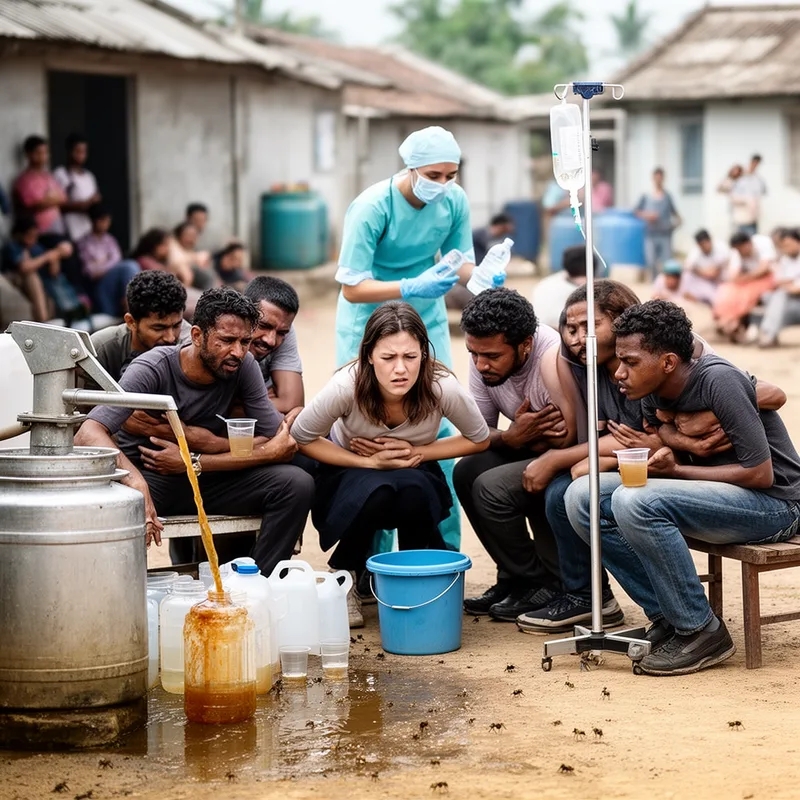
epidemic cholera
- noun
- /ˌɛpɪˈdɛmɪk ˈkɒlərə/
- Specialized
- During the outbreak, hundreds fell ill with epidemic cholera after drinking contaminated water.
Examples
-
The spread of epidemic cholera in the 19th century led to major public health reforms.
-
The outbreak of epidemic cholera in Haiti was devastating.
-
Access to clean water can significantly reduce cases of epidemic cholera in affected regions.
-
Many regions are still recovering from epidemic cholera outbreaks.
-
In many developing countries, access to clean water is crucial to preventing epidemic cholera outbreaks.
-
The government announced a public health campaign to combat epidemic cholera after a recent outbreak in the region.
-
During the summer months, the risk of epidemic cholera increases due to rising temperatures and poor sanitation.
Synonyms
 64
4.0
64
4.0

An infection of the gut that causes severe diarrhea and dehydration from dirty water or food

A severe stomach infection that causes sudden watery diarrhoea and vomiting after drinking contaminated water

A severe intestinal infection from drinking contaminated water or eating contaminated food that causes heavy diarrhea and dehydration
Surface Forms
Morphology
The phrase is directly interpretable from 'epidemic' (affecting many people) + 'cholera' (a bacterial infection): it denotes an outbreak form of cholera. This straightforward adjective+noun composition follows common cross‑linguistic patterns and would be understandable to a B1 learner who knows both constituents.
Etymology
The noun epidemic cholera names a severe stomach illness that spreads quickly through bad water or food. The word epidemic means many people get sick at once and cholera is a disease that causes very bad diarrhoea, so imagine a town drinking dirty water and many people falling ill at the same time, and you see why the phrase means 'a sudden outbreak of this dangerous disease'.