
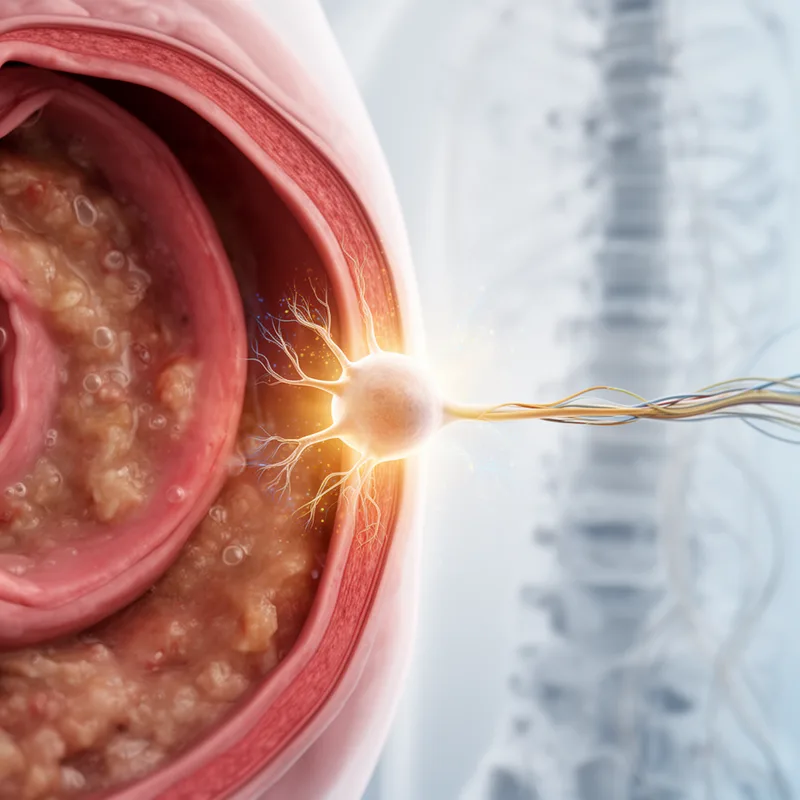
enteroceptor
- noun
- /ˌɛn.təˈroʊ.sɛp.tər/
- Specialized
- The enteroceptor plays a crucial role in regulating digestive functions by detecting changes inside the gut.
Examples
-
The enteroceptor helps the body sense when the stomach is full or empty.
-
Researchers have identified several types of enteroceptors that monitor blood pressure.
-
Damage to enteroceptors can lead to impaired detection of internal bodily changes.
-
The enteroceptor detects changes in internal organ pressure.
-
Many enteroceptors play a role in regulating digestion.
-
Without healthy enteroceptors, the body struggles to recognize pain from internal injuries.
-
Scientists study how enteroceptors react to changes in the internal environment, affecting overall health.
Synonyms

A nerve cell inside the body that senses changes in organs
Surface Forms
Morphology
Etymology
Enteroceptor comes from Greek entero- meaning 'intestine' or 'internal organs' and Latin -ceptor meaning 'one who receives', as in receptor. So an enteroceptor is a sensor that 'receives' signals from inside the body.

