
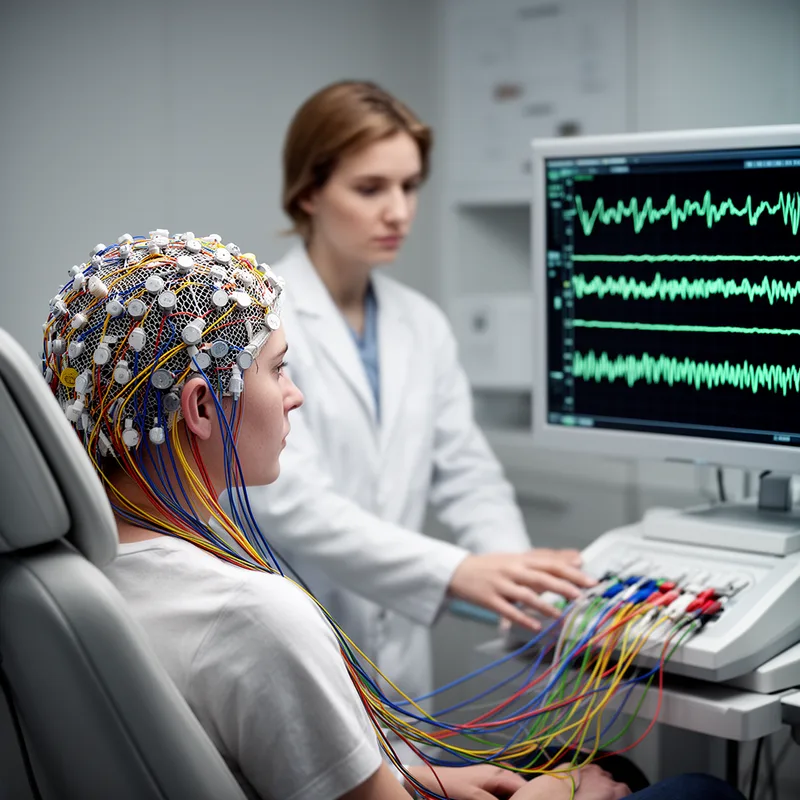
electroencephalographic
 1
9.9

- adjective
- /ˌɛlɛktroʊˌɛnˈseɪfələˌɡræfɪk/
- Specialized
- When it was not possible to obtain motor-evoked potentials from the thenar muscles, we used the 1020 electroencephalographic system for electrode placement.
- electroencephalographic (EEG)
Examples
-
However, one study showed an association between ferritin concentrations and electroencephalographic asymmetry, and another observed changes in urinary catecholamines in iron-deficient infants, which returned to normal after iron therapy.
Academic text (1999) -
Seizures may occur, and electroencephalographic testing is performed to assist in diagnosis.
Academic text (2004) -
The doctor recommended an electroencephalographic test to monitor the patient's brain activity during seizures.
-
Using electroencephalographic methods, researchers studied how different stimuli affected brain wave patterns.
-
Advanced electroencephalographic technology allows scientists to observe the electrical activity of the brain in real time.
Synonyms


 1
8.5
About the electrical activity in nerves, muscles, or the brain
 1
8.7
Relating to the electrical activity of cells or tissues
 1
6.8
Used for tests that send small electrical signals to check nerves and muscles
 1
7.5
Relating to recording electrical activity in the body, for example brain or muscle signals
Surface Forms
Morphology
electroencephalographic = electroencephalograph (opaque) = electro + encephalo + graph + ic
The adjective is formed regularly from the technical noun 'electroencephalograph' by adding -ic.
Etymology
Electroencephalographic breaks into three parts: electro- ('electricity'), encephalo- ('brain'), and -graphic ('to record'), the last part is like photograph. So electroencephalographic describes a recording of the brain's electrical activity.