
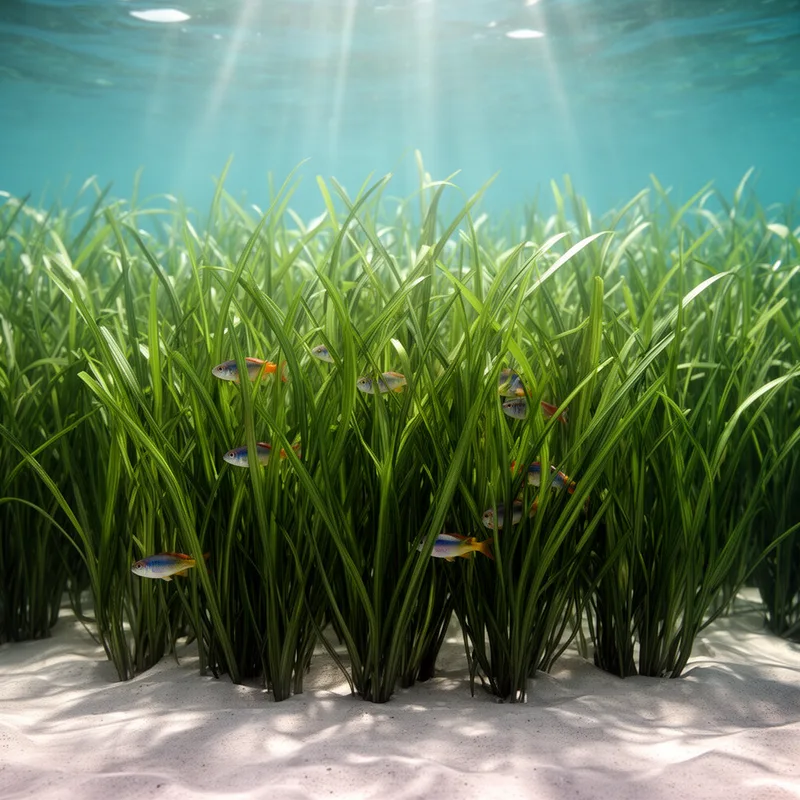
eelgrass
 1
8.1
1
8.1

- noun
- /ˈilˌɡræs/
- UK
- Furthermore, lobsters in eelgrass were larger, despite the higher densities of animals.
- eelgrass beds
- eelgrass habitat
- Loss of eelgrass
Examples
-
Their study concluded that eelgrass meadows were not significant nurseries.
Academic text (1999) -
Apparently then, the eelgrass disappearance in the bay was not a factor in the perceived decline in blue crab abundance.
Academic text (1990) -
In the 1930s, eelgrass died in the bay.
Academic text (1990) -
Studies of eelgrass and sea lettuce are also needed.
Academic text (1990) -
Locally, there were several fish, shellfish, and eelgrass merchants and shrimp processors.
Academic text (1996) -
Its edges consisted of wide shallows which had beds of eelgrass, Zostera marina, serving as nursery areas for juvenile fishes.
Academic text (1990) -
The herring are attracted to shorelines where eelgrass, pier pilings, and rocky shores make good spawning grounds.
Academic text (2003) -
Eelgrass, red algae, hanging kelp, rocks, shells, pier pilings, and boat bottoms are suitable substrates.
Academic text (2003) -
The green turtles found refuge in the dense fields of eelgrass that swayed gently in the water.
-
The shallow coastal waters are rich in eelgrass, providing essential habitat for numerous marine species.
Synonyms
 2
5.4
2
5.4
An underwater plant with long leaves that forms dense beds in shallow seas

A sea plant with long narrow leaves that grows underwater and forms beds where fish and small animals live

A sea grass that grows in shallow coastal waters and forms dense underwater meadows
Compounds
- Specialized
A group of sea plants, mainly seagrasses, that grow in shallow water
Surface Forms
Morphology
Etymology
Eelgrass is simply the two words eel and grass joined together. Its long, grass-like leaves grow under the sea and eels and small fish hide in them, so the name shows both how it looks and that it is a home for sea animals.