

to edit out
 11
3.2
11
3.2

- phrasal verb
- /ˈɛdɪt aʊt/
- When she told her life story to new friends and lovers, she edited out the part about having been married.
- edited out a part
- edited out a portion
- edited out a bit
Loading YouTube…
Watch on YouTubeI wish I could write like that, but if I did, it would be edited out as being pompous or or not entirely relevant.
- I wish I could write like that, but if I did, it would be edited out as being pompous or or not entirely relevant.
- You can edit out that straw between the legs of the child.
- OK, you can edit out whichever the, the first one was.
- I'd I'd have to this will certainly be edited out.
- Let's do just a bunch and then edit out the one, Raleigh, Raleigh, Raleigh I Raleigh.
- Also edit out What do you know about breeding Guinea pigs?
Examples
-
And I've edited out several of your crying episodes from the show.
-
I specifically edited out that part.
Fiction book (1994) -
I have the dead moments edited out.
-
Could you just edit out their laughs during that last year?
-
I will not waste my time editing out your ad links.
Blog text (3) -
You can edit out that straw between the legs of the child.
-
Edit out your initial shock.
-
And the parts that I don't like, I'm gonna edit out.
-
Ruthlessly edit out your "who cares?" pictures, no matter how beautiful or technically exquisite.
Academic text (1994) -
The director decided to edit out the scene that didn't fit the storyline.
Synonyms
 ∞
2.3
∞
2.3
To remove parts or make something shorter, for example text
 77
3.2
77
3.2
To remove a shape from paper or cloth using scissors
 14
7.2
14
7.2
To cut out part of a body or text


 1
8.0
1
8.0
Remove parts of a text to hide sensitive information
 1
6.4
1
6.4
To remove words or other information from a document to hide them
Antonyms

How Extensive

Surface Forms
Morphology
The meaning 'to remove or eliminate a part' is directly and predictably derived from combining 'edit' (to revise or change material) with the particle 'out' which commonly signals removal or exclusion. This is a regular phrasal-verb composition in English and reflects a transparent, compositional relation that a B1 learner who knows both words can infer.
Etymology
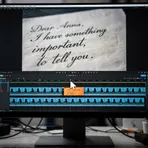
Edit out comes from the simple image of an editor cutting a strip of film or a piece of audio, where they would edit away a scene and take it out of the final version. That's why it now means 'to remove' a part from a film, recording, or text.