
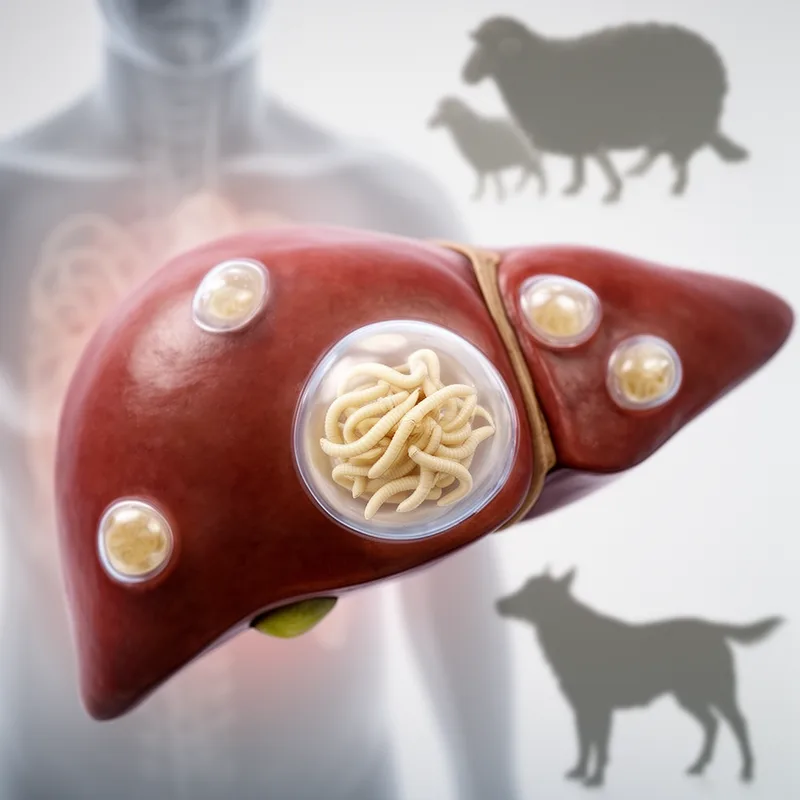
echinococcus
- noun
- /ˌɛkɪnəˈkɒkəs/
- Specialized
- The liver cyst was caused by an echinococcus infection.
Examples
-
Farmers are at risk of contracting diseases from echinococcus larvae in livestock.
-
Doctors identified the presence of echinococcus during the ultrasound examination.
-
The echinococcus is a dangerous parasite.
-
Many echinococci can infect livestock.
-
The doctor diagnosed the patient with an echinococcus infection after reviewing the medical tests.
-
Farm animals are often treated to prevent echinococcus larvae from infecting them.
-
Research shows that echinococcus can lead to serious health issues in humans if left untreated.
Surface Forms
Morphology
Etymology
Echinococcus comes from the Greek parts echinos ('hedgehog' or 'sea urchin') and kokkos ('berry' or 'seed'), because the parasite's larval cysts can look like small spiny lumps. So, the name helps you remember that echinococcus is a tiny tapeworm that makes cysts in the liver and other organs.

