

dysosmia
- noun
- /dɪsˈɑzmiə/
- Specialized
- After the accident, he developed dysosmia, which made him unable to recognize his favorite perfume.
Examples
-
The researcher studied how dysosmia affects a person's ability to enjoy food.
-
The nasal symptom domain score is an unweighted average of Likert scores for the severity of symptoms for nasal obstruction, rhinorrhea, and dysosmia.
Academic text (2006) -
Patients with dysosmia may perceive smells differently, finding familiar scents unpleasant.
Synonyms

A reduced or lost ability to smell things

A problem with the sense of smell that makes familiar smells seem wrong or unpleasant

A reduced sense of smell that is not a complete loss
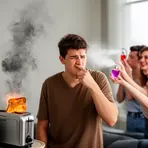
A condition where you cannot smell things like smoke or perfume
Antonyms


How Distorted

Surface Forms
Morphology
dysosmia = dys + osm + ia
The term is composed of medical combining forms ('dys-' = bad/difficult, 'osm-' = smell) plus the noun-forming '-ia'; the elements are clear to those familiar with medical vocabulary but not to average learners, so it's only partly transparent.
Etymology
Dysosmia comes from Greek parts dys- meaning 'bad' or 'difficult', as in dysfunction which means 'not working well', and osm- meaning 'smell'. So, dysosmia is when your sense of smell is poor or changed.