

parosamia
- noun
- /ˌpɛrəˈseɪmiə/
- Specialized
- After his illness, John developed parosamia and found that coffee smelled unpleasantly metallic.
Examples
-
Doctors diagnosed her with parosamia after she reported that familiar scents now seemed distorted.
-
After the accident, he experienced parosamia, causing his favorite foods to smell rotten instead of delicious.
-
Parosamia can significantly affect a person's enjoyment of food and quality of life.
-
She was diagnosed with parosamia last year.
-
Many people with parosamia report strange smells.
-
Parosamia can significantly alter how someone perceives everyday scents, making familiar smells seem unusual.
-
People living with parosamia often struggle to enjoy meals because their sense of smell has become distorted.
Synonyms

A problem with smelling that makes smells weak or wrong

A reduced or lost ability to smell things
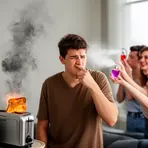
A condition where you cannot smell things like smoke or perfume
Surface Forms
Etymology
Parosamia comes from the prefix para- meaning 'beside' or 'wrong' and the part -osmia from Greek for 'smell', the same -osmia you find in anosmia ('no smell'). So parosamia is a condition where familiar smells seem 'wrong' or changed.

