

dyslipidemia


 1
9.5
1
9.5
- noun
- /ˌdɪsˌlɪpɪˈdiːmiə/
- Specialized
- Regular exercise and a healthy diet can help prevent dyslipidemia and reduce the risk of heart disease.
- hypertension and dyslipidemia
- dyslipidemia and type 2 diabetes
Examples
-
Menopause 2006; 13:265-279. British Heart Foundation. Women and heart disease: reducing your risk, 2013. Agrinier N, Cournot M, Ferrieres J. (2009) Dyslipidemia in women after 50: age, menopause, or both?
Academic text (2015) -
Dyslipidemia is the most important modifiable risk factor for atherosclerosis.
Blog text (22) -
But to date no real evidence that dyslipidemia of any sort will predict expansion.
-
In fact, HTN and dyslipidemia were found to be significant protectors from complications.
Academic text (2007) -
Anamnesis revealed that the woman had been suffering from hypertension, obesity, and dyslipidemia for 10 years.
Academic text (2007) -
One was that patients who had dyslipidemia were significantly less likely to have vascular complications (OR = 0.269, P < .001).
Academic text (2007) -
When you're in that trouble, you get atherogenic dyslipidemia, and this is the low HDL, the bad ratios, the high particle counts.
-
Thus, loss of PLIN1 or CIDEC expression in humans, unlike in mice, results in ectopic lipid accumulation, dyslipidemia, and diabetes.
Blog text (27) -
It has been found that patients with cardiac syndrome X have a high prevalence of cardiovascular risk factors, such as smoking, dyslipidemia, obesity, and estrogen deficiency, which may trigger endothelial dysfunction 11.
Academic text (2007) -
Many people with dyslipidemia may require medication to manage their cholesterol levels effectively.
Synonyms
 1
7.1
1
7.1
A condition with too much fat in the blood
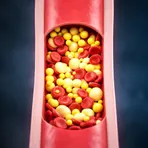
A condition with too much fat in the blood

A condition with too much fat in the blood
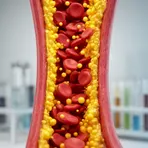
A high level of fat in the blood

A condition with too much fat in the blood that raises the chance of heart disease

A condition with a lot of fat in the blood

A condition with very high cholesterol and fat-carrying proteins in the blood

A condition with too much fat in the blood

Too much fat in the blood that can cause heart problems

Too much fat in the blood that can damage the heart and blood vessels
How Severe
- Specialized

- Specialized
1
9.5
Surface Forms
Morphology
Etymology
Dyslipidemia breaks into parts: dys- meaning 'bad' or 'abnormal', lipid meaning 'fat', and -emia meaning 'blood', like in anemia. So dyslipidemia literally means 'abnormal fats in the blood', which is why doctors use it for a condition with unhealthy levels of blood fats.