

dynamic viscosity
- noun
- /daɪˈnæmɪk vɪˈskɒsɪti/
- Specialized
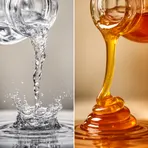
- The dynamic viscosity of water is lower than that of honey.
Examples
-
The dynamic viscosity of oil decreases as its temperature increases.
-
Engineers calculate dynamic viscosity to design efficient pipelines for liquid transport.
-
Water has a lower dynamic viscosity than honey, which allows it to flow more easily.
-
Can you measure the dynamic viscosity of this fluid?
-
Engineers calculate dynamic viscosity to design efficient pipelines for liquid transport.
-
The dynamic viscosity of oil decreases as its temperature increases.
-
Water has a lower dynamic viscosity than honey, which allows it to flow more easily.
Synonyms
 8
7.1
8
7.1

How thick and sticky a liquid is so it flows slowly

A number that shows how thick a liquid is and how hard it is to make it flow

How thick a liquid is when it flows

The thickness of a liquid that makes it flow slowly
How Viscous

Surface Forms
Morphology
The noun 'viscosity' already labels resistance to flow and the adjective 'dynamic' denotes relatedness to forces or motion, so the phrase straightforwardly signals resistance to flow under applied force or motion. It is a technical term with precise scientific nuance, but its basic meaning is compositionally predictable for a B1 learner who knows both constituents.
Etymology
The term dynamic viscosity starts with viscosity, a word from the idea of 'stickiness' in a liquid, and adds dynamic, a word about movement or force. Think of stirring honey: because it is sticky you must push harder, so dynamic viscosity measures how much a fluid resists motion when you push it, that is, its 'resistance to flow'.