
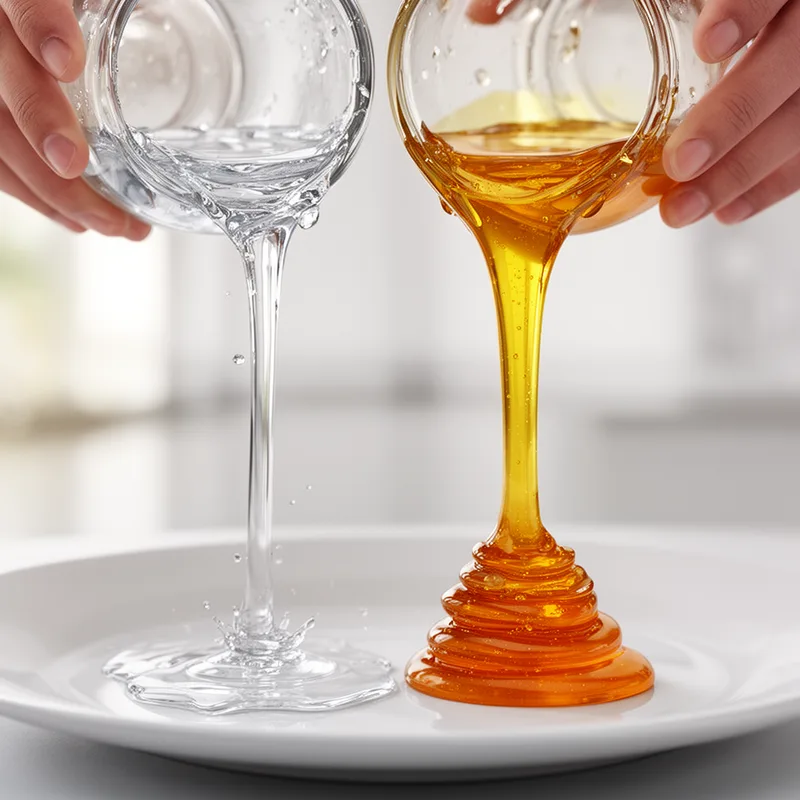
viscousness
- noun
- /ˈvɪskəsnəs/
- The viscousness of honey makes it flow very slowly, especially when cold.
Examples
-
Water has much less viscousness than syrup, which is why it spreads out easily.
-
When testing lubricants, engineers often measure their viscousness under different temperatures.
-
The viscousness of honey makes it difficult to pour.
-
High viscousness can affect the performance of lubricants.
-
The viscousness of molasses is so high that it pours very slowly even when warmed.
-
In cooking, the viscousness of sauces can determine how well they adhere to food.
-
Scientists study the viscousness of different fluids to understand their flow properties.
Synonyms
 8
7.1
8
7.1

How thick and sticky a liquid is so it flows slowly
 3
4.0
3
4.0
How slowly a liquid flows, for example honey

The thickness or stickiness of a liquid that makes it flow slowly
The quality of being sticky and thick like syrup or glue

A thick, sticky quality like that of honey or glue
Antonyms

How Viscous

Surface Forms
Morphology
Etymology
Viscousness comes from the Latin viscum, the sticky sap of mistletoe once used to catch birds, so it suggests 'stickiness'. That's why viscousness means the quality of being 'sticky' or 'slow to flow'.