

dwarf gray willow
- noun
- Specialized
- You can identify the dwarf gray willow by its long, narrow leaves that are grayish and hairy underneath.
Examples
-
The dwarf gray willow thrives in the sandy soils of the eastern United States.
-
Botanists studied the unique leaf structure of the dwarf gray willow to better understand its adaptation to dry habitats.
-
The dwarf gray willow thrives in dry soil.
-
Many gardeners prefer the dwarf gray willows for their resilience.
-
The dwarf gray willow is often found in dry areas, exhibiting its characteristic long, narrow leaves.
-
You can identify the dwarf gray willow by examining the gray, hairy undersides of its leaves.
-
In the eastern United States, the dwarf gray willow grows well in sandy, dry soil.
Synonyms

A willow bush with long narrow leaves that are pale underneath and grows in the dry eastern United States
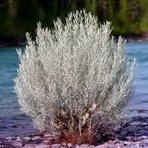
A North American shrub with long narrow light gray or white leaves
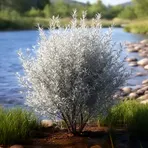
A shrub with whitish gray leaves that grows near rivers in North America
How Big
 16
2.7
16
2.7

 44
1.0
44
1.0
- Specialized
- Specialized
1
4.7
46
1.0
Surface Forms
Morphology
The compound is a straightforward noun phrase formed from 'dwarf' (small), 'gray' (color), and 'willow' (a type of tree/shrub), so a learner who knows these words can infer it denotes a small gray willow shrub. This head‑modifier compositional pattern is common and follows regular English noun formation, making the meaning immediately accessible to a B1 learner.
Etymology
Dwarf gray willow comes from the plant's very small size, the gray, hairy underside of its long narrow leaves, and the fact that it is a willow shrub that grows in dry places. The words dwarf and gray point to its small size and leaf color, so the name gives a simple picture you can use to recognize the plant.