
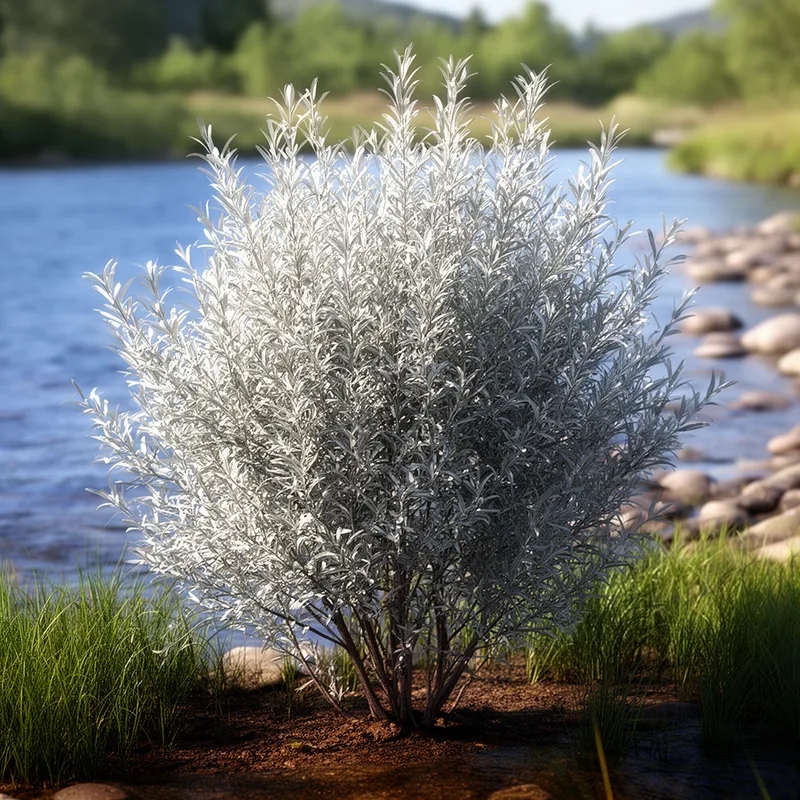
hoary willow
- noun
- /ˈhɔːri ˈwɪloʊ/
- US
- The hoary willow thrives in moist soils along riverbanks in North America.
Examples
-
The hoary willow is known for its striking grayish leaves.
-
Botanists studied the distinctive leaves of the hoary willow to understand its adaptation to the environment.
-
A cluster of hoary willow bushes bordered the edge of the meadow.
-
Many gardeners appreciate the hoary willow for its unique appearance.
-
A cluster of hoary willow bushes bordered the edge of the meadow.
-
The hoary willow thrives in moist soils along riverbanks in North America.
-
Many gardeners appreciate the hoary willow for its unique appearance.
Synonyms
A North American shrub with long narrow light gray or white leaves

A small willow shrub with white fuzzy leaves that grows in wet places
Surface Forms
Morphology
The meaning 'a willow with whitish/grayish (hairy) leaves' is directly compositional: 'hoary' describes the surface quality and 'willow' names the tree/shrub. This straightforward adjective + noun combination follows standard descriptive noun-phrase formation and is cross-linguistically common, so a B1 learner who knows both constituents would readily infer the MWE's meaning.
Etymology
Hoary willow gets its name from the plant's look: the leaves and stems are covered with tiny white hairs, so hoary means 'white or frosty' and willow is the type of tree. That's why the name describes a willow with pale, grayish leaves.

