

divergent strabismus
- noun
- /dɪˈvɜrdʒənt strəˈbɪzməs/
- Specialized
- Early intervention can improve outcomes for patients with divergent strabismus.
Examples
-
Treatment options for divergent strabismus may include corrective lenses, vision therapy, or surgery.
-
The child was diagnosed with divergent strabismus at a young age.
-
The doctor diagnosed the child with divergent strabismus after noticing her right eye turning outward.
-
Many patients with divergent strabismus require special glasses.
-
The doctor diagnosed the child with divergent strabismus after noticing her right eye turning outward.
-
Treatment options for divergent strabismus may include corrective lenses, vision therapy, or surgery.
-
Early intervention can improve outcomes for patients with divergent strabismus.
Synonyms

 1
9.8
1
9.8

A problem in which one or both eyes do not point the same way


 1
9.9
1
9.9
One or both eyes point outward instead of looking straight
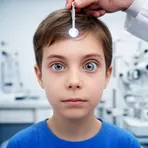
One or both eyes turn outward so they point away from the nose
Surface Forms
Morphology
The compound is compositional: 'strabismus' denotes misalignment of the eyes and 'divergent' specifies a outward/directive difference in direction, so a learner who knows both words can infer it refers to eyes turning outward. This formation is domain-specific but follows transparent modifier + noun logic and has close cognates in many languages, making the meaning predictable from the parts.
Etymology
Divergent strabismus paints a clear picture: divergent means 'moving apart' and strabismus means 'eyes not lined up'. It describes when one eye turns outward, away from the nose, so the name explains the condition where an eye 'moves away' from the other.