

disorderly conduct
 16
5.0
16
5.0

- noun
- /dɪsˈɔrdərli ˈkɒndʌkt/
- Formal
- Hoquiam officers had recently responded to the home on October 30 regarding a disorderly conduct call.
Examples
-
Many individuals were cited for disorderly conduct during the protest after yelling and pushing.
-
The police officer warned the crowd against any disorderly conduct that could disturb the peace.
-
For example, suppose someone steps forward with a claim of disorderly conduct.
Blog text (18) -
Police say she was issued a citation for disorderly conduct and released from custody.
Blog text (16) -
Eight African Americans were taken into custody for disorderly conduct and carrying weapons.
Academic text (2008) -
In December, Kristan pleaded no contest to a charge of disorderly conduct and was ordered to pay court costs.
Blog text (8) -
Although most of these passed off without incident, police made a number of arrests for disorderly conduct at rallies in the North and Midlands.
-
Most were charged with disorderly conduct, but a few have more serious charges, including trespassing and resisting arrest.
Blog text (14) -
Worthington was arrested for disorderly conduct after allegedly pushing Link in retaliation.
Blog text (27) -
The city council implemented stricter laws to address disorderly conduct at public events.
Synonyms
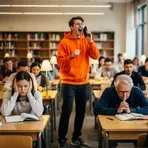 45
3.7
45
3.7
A noisy event in a public place that bothers other people
 33
5.2
33
5.2
Violent behavior by a crowd that disturbs the public
 3
7.2
3
7.2
Violent, noisy, or damaging actions by groups, often at sports events
 1
3.9
1
3.9
Causing problems for others, often on purpose
 1
9.3
1
9.3
A fight in a public place that scares people and disturbs others
 1
4.5
1
4.5
Noisy, rough behavior that causes trouble


 1
5.0
1
5.0
An action that makes people in public feel unsafe or upset
 1
5.1
1
5.1
An action that makes a public place noisy or unsafe and can get you in trouble with the police
 1
3.7
1
3.7
Actions in public that disturb other people or cause trouble
 1
5.6
1
5.6
Violent acts by a crowd in a public place that cause disorder

Noisy actions by people who do not follow rules or order

Loud, rude actions that cause trouble for other people

An event in public where a group becomes violent and damages property
Antonyms

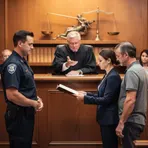
How Disorderly

Surface Forms
Morphology
The phrase is a straightforward composition: 'disorderly' describes the quality of 'conduct', so a B1 learner who knows both words can infer it means behavior that is disruptive or disturbs order. Although it often appears in legal contexts as an offense, that pragmatic/legal nuance follows directly from the transparent combination and is cross-linguistically familiar.
Etymology
Disorderly conduct comes from court language that joins the idea of disorderly as 'not following order' and conduct as 'behavior'. Imagine a noisy crowd shouting, fighting, or blocking a street, and that image of public chaos shows why it means 'behavior that disturbs public order'.