

disequilibrium
 1
8.6
1
8.6

- noun
- /ˌdɪsɪˈkwɪlɪbrɪəm/
- Specialized
- Furthermore, the economy may experience sectoral disequilibrium even in a state of macroequilibrium.
- linkage disequilibrium
- period of disequilibrium
- state of disequilibrium
Loading YouTube…
Watch on YouTubeThe material forces of his environments and disequilibrium precipitate both ruination, entropy, and rebirth.
- The material forces of his environments and disequilibrium precipitate both ruination, entropy, and rebirth.
- She calls it a disequilibrium, which made my life kind of an endless disputation, which is a nice, nice turn of phrase.
Examples
-
Once the status quo was disrupted, participants moved to the third stage in Satir's model: disequilibrium.
Academic text (2015) -
We will always be in some form of disequilibrium.
-
Placed off course like that, the disequilibrium made itself more pronounced in the following days.
Fiction book (1994) -
Two developments are likely to disrupt this global disequilibrium in gas prices.
Academic text (2011) -
Chickering suggests that the catalyst for growth in students is the disequilibrium they experience in a new environment.
Academic text (2014) -
Developmental change is thought to be motivated by a process called disequilibrium (Piaget, 1928).
Academic text (1995) -
Instead, this approach assumes that current-account deficits are disequilibrium responses to policy errors, which market imperfections aggravate.
Academic text (1990) -
When tension exists between the external interpretation and the internal schema, disequilibrium and dissonance occur (Piaget, 1972).
Academic text (2014) -
During economic downturns, disequilibrium often leads to significant fluctuations in employment levels.
-
A lack of proper communication can create a disequilibrium within a team, affecting their overall productivity.
Synonyms
 114
5.1
114
5.1
A situation that changes easily and can fail, for example in politics
 86
4.2
86
4.2
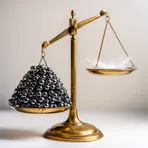
When different parts are not equal in amount or power

A condition when a system is not balanced or steady, often in science

A situation where two or more parts are not the same

A state in which things are not firm or steady
Antonyms


How Balanced
35
6.8
 363
3.1
363
3.1
- Specialized
1
8.6
86
4.2
114
5.1
Surface Forms
Morphology
disequilibrium = equilibrium (transparent) = dis + equilibrium
For learners who know 'equilibrium', adding 'dis-' straightforwardly gives the meaning 'lack of equilibrium' or 'imbalance'.
Etymology
Disequilibrium is made from dis- meaning 'not' and equilibrium meaning 'equal balance', and it is related to the word equal. So disequilibrium literally means 'not equal balance', which is why we use it for a loss of balance in a person or in a system.