
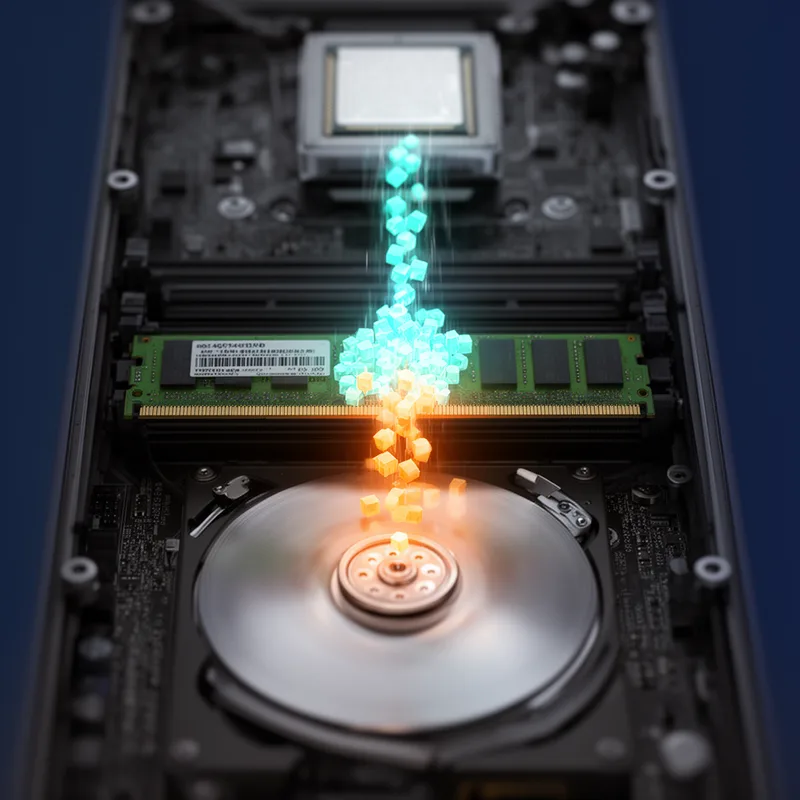
disk cache
- noun
- /dɪsk kæʃ/
- Specialized
- Can you explain how the disk cache works?
Examples
-
The disk cache significantly improved the system's performance.
-
When the disk cache is correctly configured, applications run smoother by reducing the need to access the hard drive.
-
If the disk cache is too small, the computer may access the hard drive more often.
-
Installing additional memory can help increase the size of your disk cache for better performance.
-
Many modern computers use a disk cache to improve data retrieval speed.
-
Upgrading the disk cache in your computer can significantly improve the speed of data retrieval.
-
The software quickly accesses frequently used files from the disk cache, minimizing load times.
Synonyms

 19
6.1
19
6.1

A fast memory in a computer that keeps recent data to make programs run faster
 6
4.4
6
4.4
Storing data for a short time so it can be opened faster
How Fast
- Specialized
5
7.0

- Specialized

 1
3.7
1
3.7
- Specialized
- Specialized
Surface Forms
Morphology
The meaning is directly and compositionally derived from 'disk' (storage device) + 'cache' (area of memory holding frequent data): a cache that stores disk data to speed access. This noun‑noun technical compound follows a transparent compounding pattern familiar across languages and would be understandable to a B1 learner who knows both constituents.
Etymology
The noun disk cache comes from the image of a small store, a cache, near the disk that keeps things ready. It keeps copies of often-used files in faster memory so the computer does not need to go to the slower 'disk' each time, and that is why a disk cache makes reading data faster.