
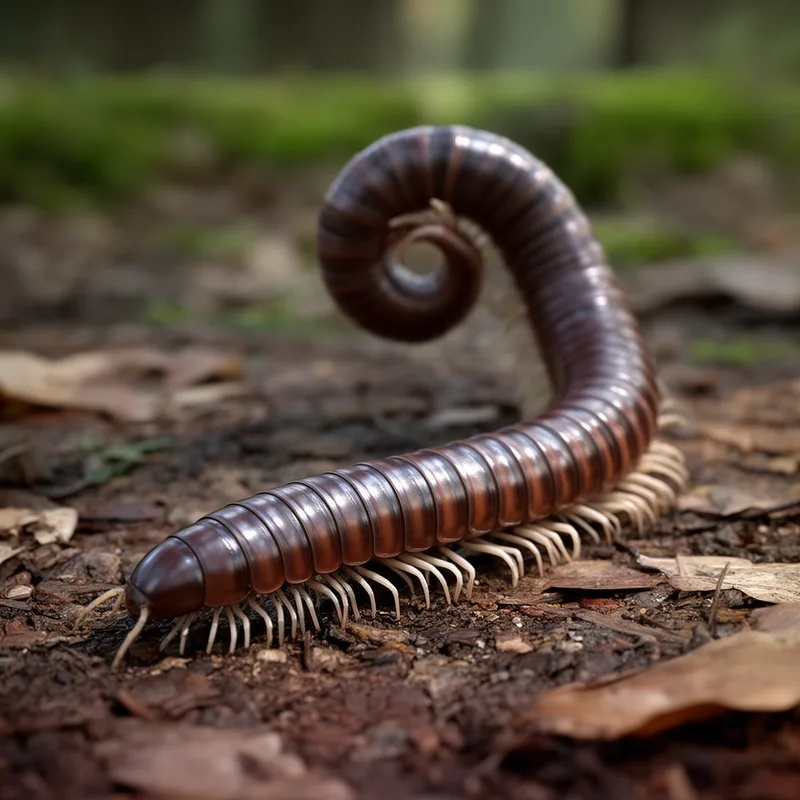
diplopod
- noun
- /ˈdɪpləˌpɒd/
- Specialized
- A diplopod can be recognized by its long body with many segments, each equipped with two pairs of legs.
Examples
-
Widyastuti has tried to produce compost with diplopod, species Spirostreptus sp. (it is known as a thousand-leg insect).
Academic text (1998) -
The cayu puti (Eucalyptus) solid waste composting with diplopod is managed by Dr. Widyastuti, M.Sc, of Gajah Mada University.
Academic text (1998) -
Perhaps diplopod composting is only done in Indonesia.
Academic text (1998) -
Different from other systems, vermicomposting and diplopod composting utilize small boxes and need extra attention.
Academic text (1998) -
Systems used are open windrow, open bin, Caspari, vermicomposting, and "diplopod" composting.
Academic text (1998) -
The composting systems (open windrow, open bin, and Caspari, as well as vermicomposting and diplopod composting) persist in Indonesia due to the following reasons: 1)
Academic text (1998) -
The diplopod curled up defensively when it felt threatened by a nearby insect.
-
Many gardeners appreciate how diplopods help enrich the soil by breaking down organic matter.
Synonyms
 5
4.9
5
4.9

A small long animal with many legs that eats plants or dead leaves
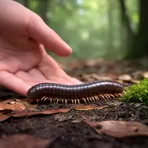
A small animal with a long round body and many legs that moves slowly
How Many Legs

Surface Forms
Morphology
diplopod = diplo + pod
A technical scientific coinage from Greek combining forms (diplo- 'double' + -pod 'foot') that are not familiar or productive for an average B1 learner, so the meaning 'millipede' is not transparently derivable from the parts.
Etymology
Diplopod comes from Greek parts diplo- meaning 'double' and -pod meaning 'foot'. So a diplopod is literally a 'double-foot' animal, which fits a millipede because each body segment has two pairs of legs.