
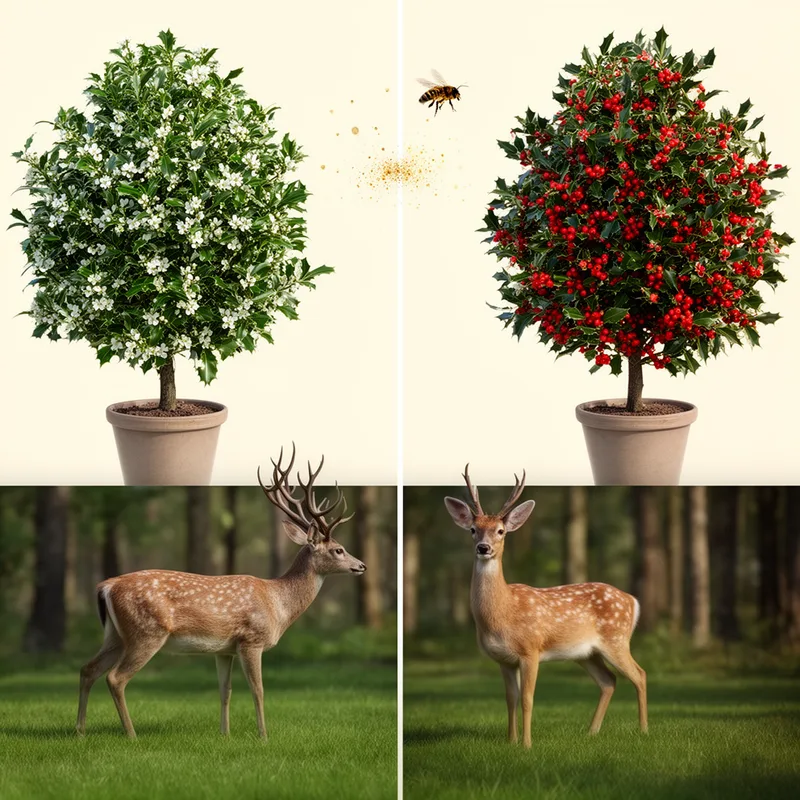
dioecious


 1
9.9
1
9.9
- adjective
- /daɪˈiːʃəs/
- Specialized
- In temperate climates, many woody plants are dioecious, meaning that they have distinct male and female individuals.
- dioecious figs
- dioecious, female
- monoecious and dioecious
Examples
-
Most species of precious coral are unisexual or dioecious, i.e., the sexes are separate.
Academic text (1993) -
In dioecious figs (not illustrated), two types of inflorescence are borne on different plants.
Academic text (2005) -
Researchers fear potential cross-pollination between monoecious and dioecious hydrilla in areas where both biotypes grow together.
Academic text (2005) -
Most seagrasses (56% of all species) are dioecious (male and female flowers on different plants) (Les et al. 1997), which is an order of magnitude more common than among the angiosperms as a whole (4% of species; Richards 1986).
Academic text (2012) -
These dioecious figs have diverged ecologically into a broad spectrum of niches (Figure 2, Table 5; Harrison and Shanahan 2005).
Academic text (2005) -
However, in the Indo-Pacific, several dioecious lineages have radiated and diversified ecologically, resulting in exceptionally rich fig assemblages in this region.
Academic text (2005) -
Yet, unlike most annuals, N. marina does not conform to the general model that the evolution of annuals is tied to efficient reproduction brought about by self-pollination, an impossibility in this dioecious species.
Academic text (1996) -
In the predominantly unisexual flowered family Hydrocharitaceae, several dioecious (male and female flowers on separate plants) species have become weedy even though only one sex had been introduced (Cook 1993, Hutchinson 1975, Sculthorpe 1967).
Academic text (1996) -
Sea buckthorn are dioecious; male and female flowers are borne on different plants.
-
Similar to the American persimmon, hollies are dioecious because they have male and female reproductive organs on separate individuals.
Synonyms
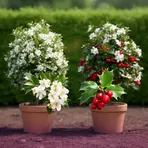
Having male and female parts on different plants or animals
Antonyms
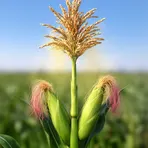
- Specialized
1
9.9
A plant or animal that has both male and female reproductive parts on the same body
Surface Forms
Morphology
dioecious = dioecy (semi-transparent) = di + oecy + ous
Formed from the noun 'dioecy' + adjectival suffix '-ous'; the prefix 'di-' signals 'two' but the combining element 'oecy' is specialized, so the meaning is partly guessable but technical.
Etymology
The word dioecious comes from Greek parts di- 'two' and oikos 'house', and is related to the 'eco-' in ecosystem and eco-friendly. So a dioecious species has 'two houses' for reproduction, meaning males and females are on separate plants or animals.