
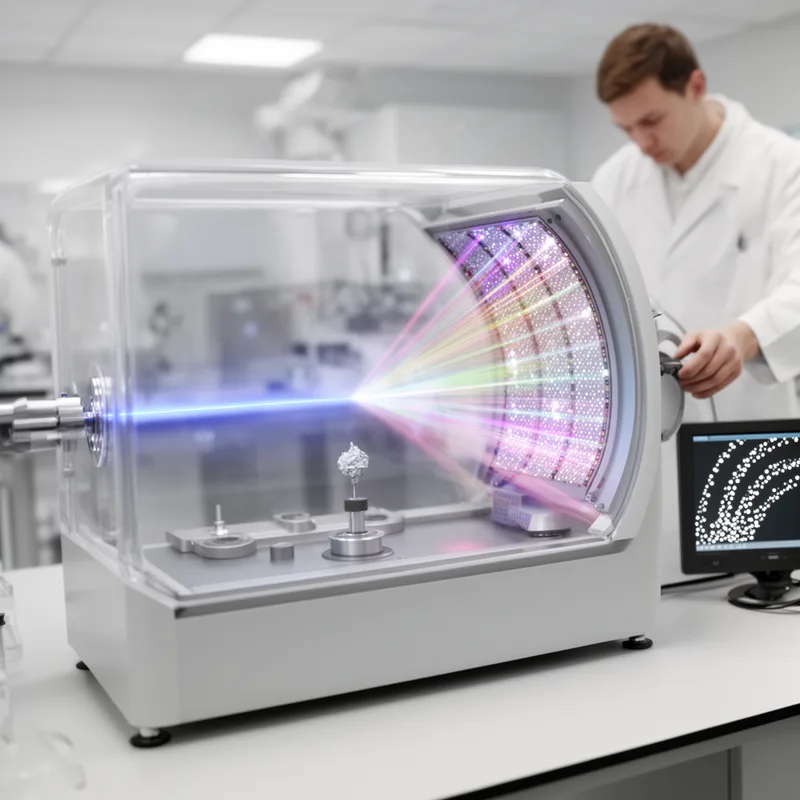
diffractometer


 1
9.9
- noun
- /dɪˌfræktəˈmɒtər/
- Specialized
- The scientist set up the diffractometer to analyze how the crystal structure affected the light patterns generated by the sample.
- an X-ray diffractometer
- a ray diffractometer
Examples
-
The XRD data were obtained using a wide-angle X-ray diffractometer with a copper anode at 40 kV and 35 mA.
Academic text (2017) -
XRD patterns were recorded with a Philips PW 1800 X-ray diffractometer in the 5-80 degrees range, with a step size of 0.02 and a scanning speed of 0.5 s.
Academic text (2018) -
Discover a diffractometer equipped with a general area detector diffraction system (GADDS) as a 2D detector in transmission mode at room temperature.
Academic text (2018) -
Using the diffractometer, researchers measured how the laser beams were spread as they passed through the mineral sample.
-
After calibrating the diffractometer, the team was able to obtain precise measurements of how particles scattered when passing through different materials.
How Specialized
- Specialized
1
9.9
 2
3.0
- Specialized
1
7.0
4
6.9
Surface Forms
Morphology
Etymology
Diffractometer comes from diffract meaning 'break apart' and the ending -meter meaning 'measure', the same -meter in thermometer and speedometer. So a diffractometer is a tool that 'measures' how a beam of light or particles is 'broken apart' or spread when it passes through a material.