
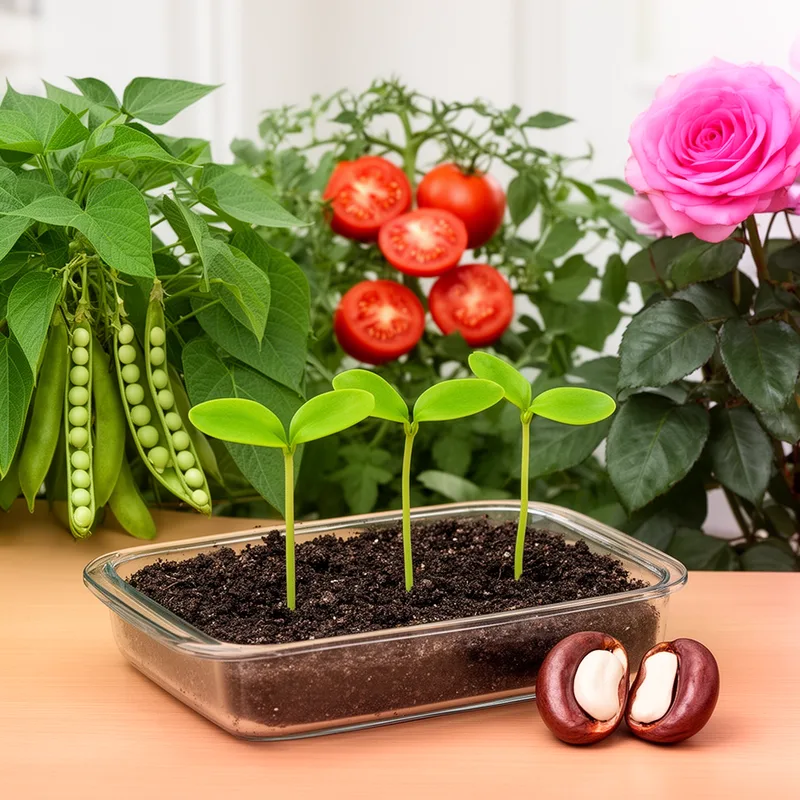
dicot family
- noun
- /ˈdaɪkɒt ˈfæmɪli/
- Specialized
- Many common vegetables are part of a dicot family, including beans and tomatoes.
Examples
-
The rose belongs to a dicot family known for its broad leaves and intricate flower structures.
-
Botanists use the number of cotyledons to classify whether a plant is in a dicot family or not.
-
The dicot family includes many common plants.
-
Many flowers belong to the dicot family.
-
Many common vegetables, such as beans and tomatoes, belong to the dicot family of plants.
-
The rose is part of the dicot family, which is characterized by having two cotyledons.
-
Botanists classify plants into groups, including the dicot family, based on their seed structure.
Synonyms

A group of flowering plants with two seed leaves when they start to grow
Surface Forms
Morphology
The noun phrase denotes the taxonomic family composed of dicotyledonous plants, so its meaning is directly compositional from 'dicot' (plants with two embryonic leaves) + 'family' (a grouping of related species). Although somewhat technical, the combination follows standard noun–noun compounding and is cross-linguistically transparent, so a learner who knows both constituents can infer the meaning.
Etymology
The term dicot family comes from the fact that these plants' seeds usually have two first leaves called cotyledons, or 'seed leaves', which you see when a seed sprouts. Because they have two of these 'seed leaves', botanists grouped them together, so the phrase means a plant family whose seeds normally show two first leaves.

