
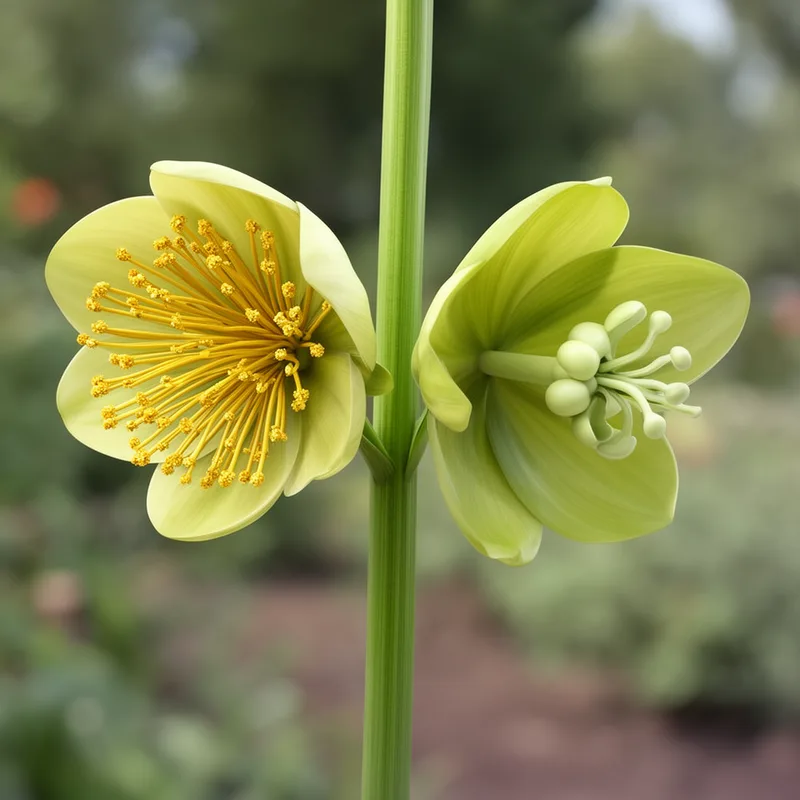
diclinous
- adjective
- /ˈdaɪklɪnəs/
- Specialized
- In diclinous plants, one flower bears only stamens, while another bears only pistils.
Examples
-
Many willow species are diclinous, producing separate male and female flowers on the same or different plants.
-
Is this species diclinous or hermaphroditic?
-
Understanding whether a plant is diclinous is important in botanical classification and breeding.
-
The diclinous flowers bloom at different times.
-
In diclinous plants, each flower is specialized; one has only stamens and another has only pistils.
-
Many willow species are diclinous, featuring distinct male and female flowers either on the same plant or on separate ones.
-
Identifying if a flower is diclinous helps botanists understand its reproduction methods.
Antonyms

Surface Forms
Morphology
diclinous = di + clin + ous
A specialised botanical formation from Greek combining forms ('di-' + 'clin-') plus the adjectival suffix '-ous'; the non‑standalone root 'clin' and the technical sense make it unintelligible to an average B1 learner.
Etymology
Diclinous comes from the Greek parts di- 'two' and -clinous from a root meaning 'bed' or 'to lie', like in recline. A helpful way to remember it is to think of the male and female parts sitting on 'two beds' in separate flowers, which is exactly what 'diclinous' means.

