
dicarboxylate
- noun
- /ˌdaɪkɑrˈbɑksɪleɪt/
- Specialized
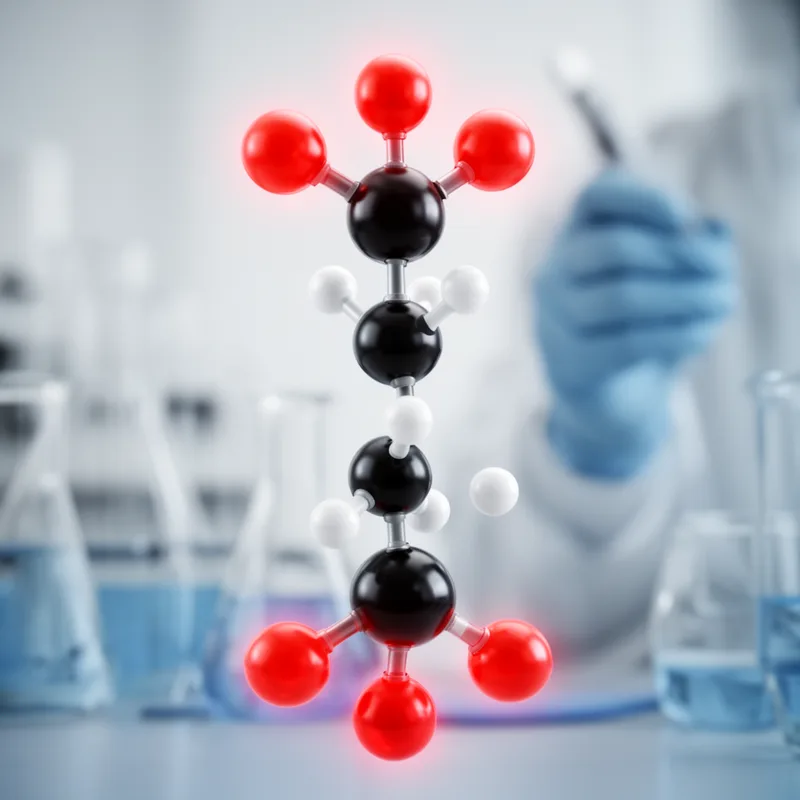
- The chemical formula for the dicarboxylate indicates the presence of two carboxylate groups attached to the carbon backbone.
- dicarboxylate metabolism
Examples
-
In the lab, we synthesized a new dicarboxylate that showed promise in reducing environmental pollutants.
-
Glyoxylate and dicarboxylate metabolism also has a large rise in contribution to variance with age.
Academic text (2018) -
The 50+ age group appears to lie along the glyoxylate and dicarboxylate metabolism axis.
Academic text (2018) -
The 50+ group appears to lie along the glyoxylate and dicarboxylate metabolism axis. Exchange/demand reaction and oxidative phosphorylation remain the high contributors to variance for all three age groups.
Academic text (2018) -
The researchers studied a specific dicarboxylate compound to understand its effects on plant growth.
Surface Forms
Morphology
dicarboxylate = carboxylate (transparent) = di + carboxyl + ate
Formed by prefixing 'di-' (two) to the standard chemical base 'carboxylate', so it directly denotes two carboxylate groups.
Etymology
Dicarboxylate starts with di- meaning 'two' and the part carboxylate points to a part of a molecule made of carbon and oxygen atoms. So, a dicarboxylate is a chemical compound that has 'two' carboxylate groups.

