
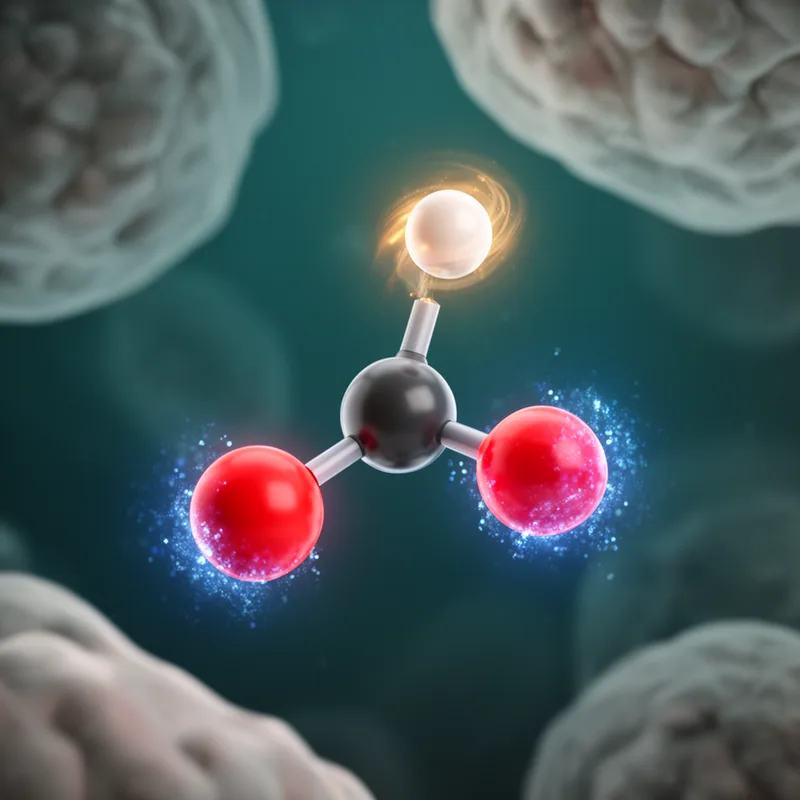
carboxylate
- noun
- /kɑrˈbɑksɪleɪt/
- Specialized
- The carboxylate group plays a crucial role in forming complexes with other molecules.
- carboxylate ligands
- carboxylate shift
- carboxylate rearrangement
Examples
-
Our studies indicate that this process occurs with a large activation barrier if during the reaction all Fe-O (bridging carboxylate) bonds remain intact.
Academic text (2001) -
We also have this carboxylate group, which we also have here.
-
Or if you have an extra electron on it and you have the carboxylate anion, then again, it's just one species, a single minimum, right?
-
Which is more stabilized, the carboxylate or the original alcohol, the carboxylic acid?
-
Thus, the data described above clearly show that the ubiquitous carboxylate ligands (glutamates and aspartates) of MMOH and R2 may play a special role in the proper functioning of these enzymes.
Academic text (2001) -
The researchers measured the stability of the carboxylate ion formed when the acid dissociated.
-
In the experiment, the carboxylate was shown to effectively interact with metal ions.
Surface Forms
Morphology
Etymology
Carboxylate joins carboxyl ('carbon' + 'oxygen') with the ending -ate, which often names a salt or negative ion (think carbonate). A carboxylate is the ion you get when a carboxyl 'acid' loses a hydrogen, so it carries a negative charge.

