

diapsid
- noun
- /ˈdaɪæpsɪd/
- Specialized
- Pterosaurs were flying diapsid reptiles (other diapsids include ichthyosaurs, plesiosaurs, lizards, crocodiles, and dinosaurs).
- diapsid reptiles
Examples
-
Pterosaurs represent a group of flying diapsids that lived during the Mesozoic Era.
-
The diapsid skull is characterized by a pair of openings behind each eye.
-
Pterosaurs were flying diapsid reptiles (other diapsids include ichthyosaurs, plesiosaurs, lizards, crocodiles, and dinosaurs).
Academic text (2007) -
During evolution, many species emerged as diapsids, leading to the diverse reptiles we see today.
Synonyms
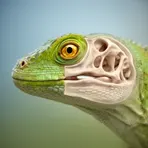
A reptile with two openings in the skull behind each eye, like lizards and crocodiles
Antonyms
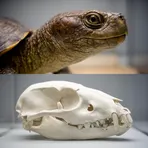
- Specialized
A reptile with no holes on the sides of its skull, like early reptiles and turtles
Compounds
- Specialized
A reptile with two openings in the skull behind each eye, like lizards and crocodiles
Surface Forms
Morphology
diapsid = di + apsid
Formed from Greek combining elements (di- 'two' + apsid), but the combining element 'apsid' is a technical, non-standalone morpheme, so the meaning is not readily inferable by an average learner.
Etymology
Diapsid comes from Greek parts meaning 'two' (di-) and 'arch' or 'opening' (-apsid). So a diapsid is a reptile with a 'pair of openings' behind each eye, and this skull feature is what scientists use to group many modern and extinct reptiles.

