
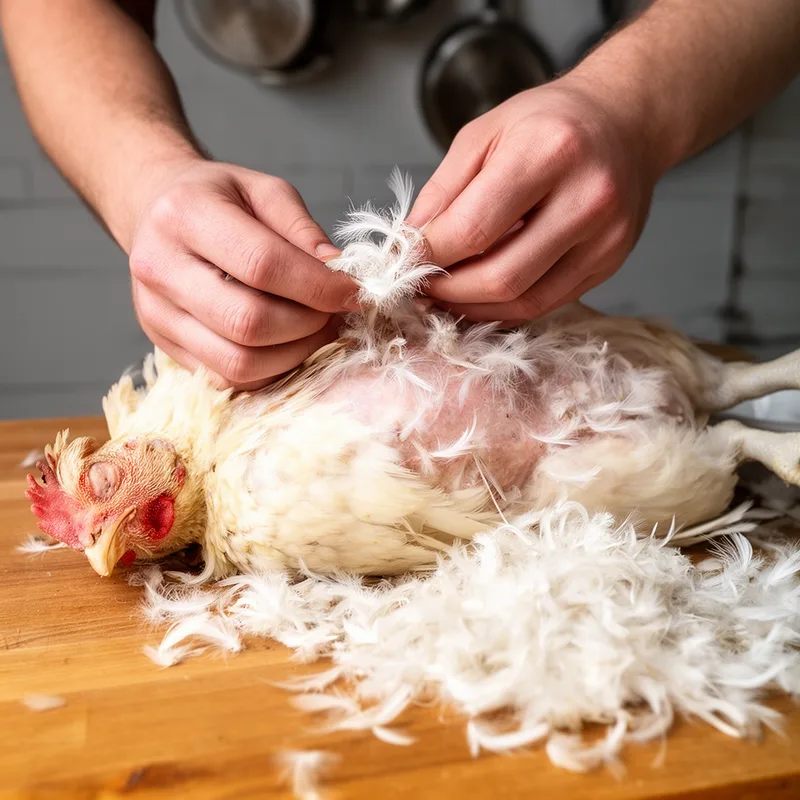
to deplumate
9.9
To remove the feathers from a bird
- verb
- /dɪˈplʌmeɪt/
- Archaic
:
desplumar
- The farmhand began to deplumate the chickens in preparation for cooking.
Examples
-
After catching the goose, he set about deplumating it for the feast.
-
Scientists carefully deplumated several birds to study their skin condition.
-
They will deplumate the birds before cooking them.
-
The chef deplumated the chicken for the recipe.
-
The farmer had to deplumate the birds before preparing them for market.
-
Before cooking the duck, she needed to deplumate it properly.
-
After the hunt, he began to deplumate the pheasants for the dinner table.
Synonyms
to pluck
vsto deplumate
 26
5.6
26
5.6

To remove the feathers from a bird before cooking
is used for removing feathers generally, not limited to food preparation
9.9
To remove feathers from a bird
is identical in meaning but exists as an alternative word form
9.9
To pull the feathers off a bird before cooking
is the same action but appears as the common listed form
Antonyms


Surface Forms
deplumate infinitive
deplumated past
deplumated past participle
deplumating present participle
deplumates third person singular
Morphology
Etymology
Deplumate comes from the prefix de- meaning 'remove' and the same root as plume and plumage, which mean 'feather'. So, to deplumate is to take the feathers off a bird.