

to displume
9.9
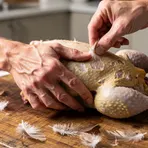
To remove feathers from a bird
- verb
- /dɪsˈplum/
- Archaic
:
desplumar
- The cook began to displume the pheasants for the evening meal.
Examples
-
He carefully displumed the birds before preparing them for roasting.
-
The farmer displumed the chickens for their feathers.
-
In the old tales, noblemen would displume their conquests as a sign of victory.
-
They displumed the bird carefully.
-
The cook began to displume the pheasants for the evening meal.
-
He carefully displumed the birds before preparing them for roasting.
-
The farmer displumed the chickens for their feathers.
Synonyms
to pluck
vsto displume
 26
5.6
26
5.6

To remove the feathers from a bird before cooking
is the general act of stripping feathers beyond culinary contexts
9.9
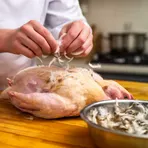
To pull the feathers off a bird before cooking
is the general act often used also for cooking or display
9.9
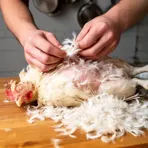
To remove the feathers from a bird
is similar but focuses less on force and more on removal
How Thorough

Surface Forms
displume infinitive
displumed past
displumed past participle
displuming present participle
displumes third person singular
Morphology
Etymology
Displume comes from dis- meaning 'remove' and plume meaning 'feather', so it literally means to take the feathers off a bird, or to pluck it.