
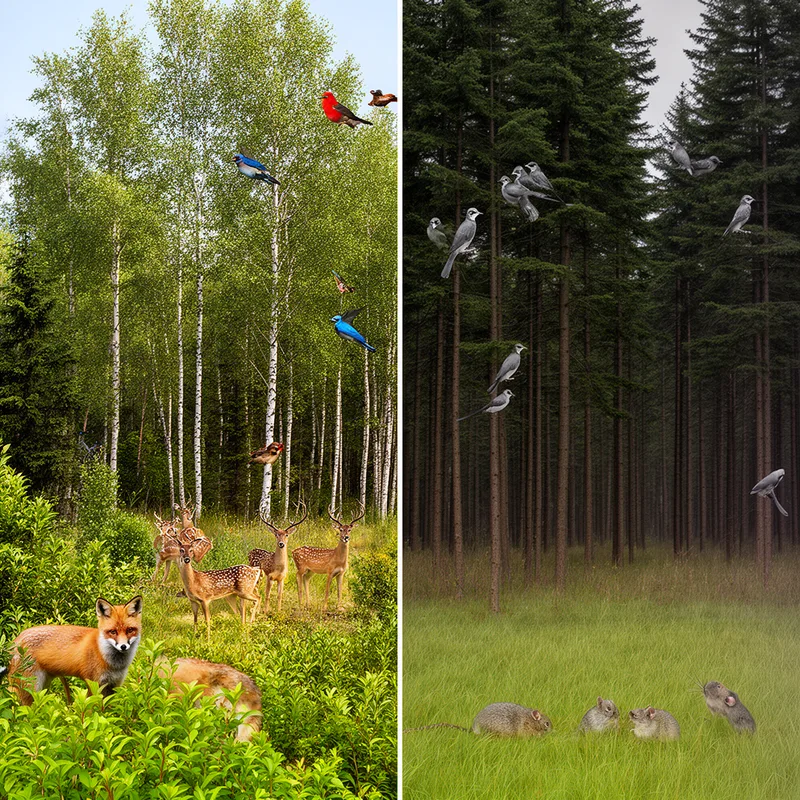
depauperate
- adjective
- /dɪˈpɔːpərɪt/
- Specialized
- depauperate communities
Examples
-
Compared with natural forests, of course, even agroforest lands are generally depauperate.
Academic text (2003) -
Because islands may be depauperate in native species relative to mainlands, island communities may offer reduced biotic resistance to invasion.
Academic text (2013) -
It is clear that the previously held generalization that arbuscular mycorrhizal fungal communities are depauperate relative to their associated plant communities needs to be reevaluated.
Academic text (2001) -
The captive flock in Paxinos and colleagues' (2002) study was probably genetically depauperate, but the contribution of captive-released birds is not clear.
Academic text (2012) -
This belief has been supported both by the observations that these fungi have low specificities of association (individual species can associate with a broad range of host plants) and by the perception that AM fungal communities are depauperate relative to plant communities (Law and Lewis 1983, Allen et al. 1995).
Academic text (2001) -
A species-rich, structurally diverse agroforestry setting finds itself changed into a relatively depauperate system—in terms of both managed and associated biodiversity—more in line with conventional agricultural goals of production at any cost.
Academic text (1999) -
The once vibrant coral reef is now depauperate, with few species remaining due to pollution.
-
Islands often have depauperate ecosystems, lacking the biodiversity found on continental landmasses.
-
The soil quality in that area is depauperate, resulting in poor plant growth and limited variety.
Synonyms

Lower in quality or value than before
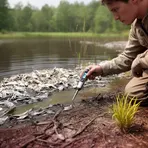
An acidic lake or soil with a lot of dead plants and few nutrients
Antonyms



How Rich

Surface Forms
Etymology
Depauperate comes from a French verb meaning 'to make poor', built from the parts de- and Latin pauper meaning 'poor', the same root you see in the English word pauper. So depauperate literally means 'made poor' and is used for places or communities that lack variety or richness.