

dehiscent
- adjective
- /dɪˈhɪsənt/
- Specialized
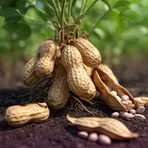
- As the plant matured, its dehiscent fruits burst open, releasing their seeds into the wind.
Examples
-
The pea pods were dehiscent, splitting open to scatter seeds across the garden.
-
The dehiscent capsule of the plant splits readily when ripe, ensuring its seeds are dispersed effectively.
-
The nerve may be dehiscent and course above or below the oval window, or even through the stapedial arch.
Academic text (1996) -
The horizontal portion of the facial nerve was in a normal position relative to the stapes, but dehiscent.
Academic text (2003) -
In 535 temporal bones, 55% of the facial nerves were dehiscent.
Academic text (1996) -
A dehiscent nerve has been found in the external bony ear canal 2 to 3 mm lateral to the tympanic membrane.
Academic text (1996) -
Temporal bone studies suggest that the bone overlying the superior semicircular canal may be dehiscent in as much as 0.7% of the population and less than 1 mm thick in another 1.3% of individuals.
Academic text (2009) -
Lateral dissection is done with great care, especially in the posterior lateral corner where the bony covering of the optic nerve may be dehiscent.
Academic text (1994) -
Photograph shows a horizontal canal fistula (black arrow), dehiscent facial nerve (large white arrow), and unresectable cholesteatoma (small white arrow).
Academic text (2001) -
33 Dietzel (cited by Kettel) reported 57% of 211 temporal bones to have a dehiscent segment of the facial nerve.
Academic text (1996)
Synonyms

Opening suddenly and forcefully like a pod releasing seeds
Antonyms


How Open
- Specialized

- Specialized

 1
9.9
Surface Forms
Morphology
Etymology
Dehiscent comes from the Latin parts de- meaning 'away' and hiscere meaning 'to split open'. So a dehiscent fruit or seed pod is one that opens on its own to 'release' its seeds.