

dead march


 1
8.8
1
8.8
- noun
- At the ceremony, they played a dead march to create a respectful and mournful atmosphere.
Examples
-
The somber tone of the dead march echoed through the streets during the funeral procession.
-
There'll be a procession, bands, dead march, bells tolling... all the girls in tears - Yum-Yum distracted.
-
His obituary notes that he was carried by torchlight from the government house to the church, where he lay in state "with all the honors of war," including 100 armed grenadiers, a battalion of 256 men, and "drums covered with black, beating the dead march."
Academic text (2009) -
As the pallbearers walked slowly behind the casket, the band played a dead march to honor the deceased.
Synonyms
 1
3.5
1
3.5
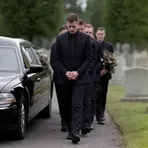
Slow, sad music played during a funeral procession
 1
7.6
1
7.6
A piece of music played during a formal walk in a ceremony
 1
3.2
1
3.2
Music that people play at a funeral to remember someone, usually slow and sad
 1
4.9
1
4.9
A slow, formal walk people make during a ceremony or funeral
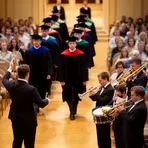
Music with a steady marching beat played during a formal procession
Antonyms

How Solemn

Surface Forms
Morphology
The meaning 'a slow, solemn piece of music for funerals' is directly and compositionally derivable from 'dead' (relating to death) + 'march' (a rhythmic piece of music). This pattern (e.g. 'funeral march' / 'marche funèbre') is cross-linguistically common, so a B1 learner who knows the constituents would readily infer the MWE's meaning.
Etymology
Dead march comes from funeral walks where people moved slowly behind a coffin. The image of the dead and a slow march explains why it now names a slow, solemn piece of music for 'funerals'.