
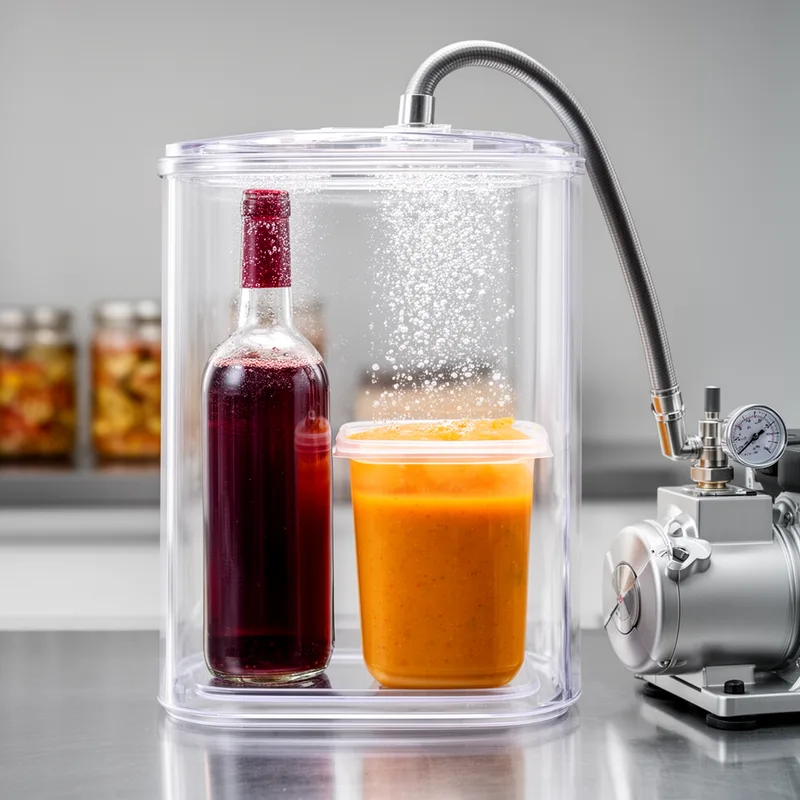
to de-aerate
- verb
- /diːˈɛəreɪt/
- Specialized
- Manufacturers de-aerate packaged foods to extend their shelf life.
Examples
-
They used a vacuum pump to de-aerate the solution effectively.
-
You need to de-aerate the mixture before sealing it.
-
Before bottling, the wine must be de-aerated to preserve its quality.
-
The chef de-aerates the sauce to enhance its flavor.
-
You should de-aerate the mixture before sealing the jars for storage.
-
To improve the wine's quality, the winemaker will de-aerate it during the bottling process.
-
The chef decided to de-aerate the chocolate mousse to achieve a smooth texture.
Synonyms


 1
7.9
1
7.9
To remove gas from a liquid or solid, often by heating
Remove air or gas from a liquid
To remove gas from a liquid or material
Antonyms
How Aerated

Surface Forms
Morphology
de-aerate = aerate (transparent) = de + aer + ate
For learners who know 'aerate', adding 'de-' straightforwardly gives the opposite meaning of removing air or gas.
Etymology
De-aerate is built from de- meaning 'remove' and aer meaning 'air', the same root you see in aeroplane and aerobic. So, to de-aerate something is to take the air out of it to stop spoilage or to improve its quality.