

daylight-savings time
 2
3.6
2
3.6

- noun
- /ˈdeɪˌlaɪt ˈseɪvɪŋz taɪm/
- US
- Also a friendly reminder to set your clocks ahead for daylight savings time.
Loading YouTube…
Watch on YouTubeI really enjoy daylight savings time.
- I really enjoy daylight savings time.
Examples
-
Some argue that daylight savings time disrupts their sleeping patterns.
-
You know who came up with daylight savings time, don't you?
-
And l want to end daylight savings time.
-
Everyone at work kept saying it was daylight savings time.
-
It's daylight savings time again.
-
What's your position on daylight savings time?
-
"Folks, I want to remind you, this is the end of daylight savings time tonight," Mr. Biden said.
Blog text (13) -
I am already dreading daylight savings time and how early Charlie will get up.
Blog text (13) -
Many people enjoy the longer evenings during daylight savings time.
-
Don't forget to change your clocks when daylight savings time begins next week.
Synonyms
 11
3.0
11
3.0
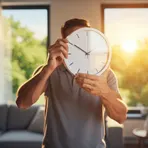
Setting clocks forward one hour during some months to have more daylight in the evening
 4
3.2
4
3.2
People set clocks one hour ahead in spring to make evenings lighter
 1
3.1
1
3.1
People turn clocks forward one hour in summer to make evenings lighter
Antonyms

Surface Forms
Morphology
daylight-savings + time
The parts 'daylight' and 'time' clearly signal this is a time-related concept tied to daylight, so a learner can infer it concerns clocks/periods associated with daylight. However, the word 'saving' is used metaphorically (and the phrase refers to the cultural practice of shifting clocks), so full understanding often requires cultural knowledge or exposure rather than strict compositional derivation.
Etymology
Daylight-savings time comes from the idea of 'saving' daylight for later. People set clocks forward one hour so an hour of daylight moves from the morning into the evening. That's why the phrase means changing the time to keep extra daylight.