

daylight savings
 4
3.2
4
3.2

- noun
- /ˈdeɪˌlaɪt ˈseɪvɪŋz/
- US
- During daylight savings time, we set our clocks forward one hour in the spring.
- daylight savings time
Loading YouTube…
Watch on YouTubeI really enjoy daylight savings time.
- I really enjoy daylight savings time.
Examples
-
Also a friendly reminder to set your clocks ahead for daylight savings time.
-
But really, I live in Arizona, one of two states that doesn't do daylight savings.
Blog text (3) -
And l want to end daylight savings time.
-
Everyone at work kept saying it was daylight savings time.
-
It's daylight savings time again.
-
Thanks to daylight savings, I got an extra hour of sleep the night before the race.
Blog text (14) -
What's your position on daylight savings time?
-
I am already dreading daylight savings time and how early Charlie will get up.
Blog text (13) -
For example, a number of studies indicate that on the day we "spring forward" for daylight savings time, traffic accidents spike higher than average.
Blog text (21) -
We still hadn't decided by Sunday morning, but we found out that Daylight Savings Time would be observed, and we got to church on time.
Blog text (23)
Synonyms
 11
3.0
11
3.0
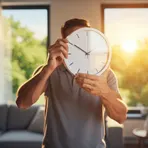
Setting clocks forward one hour during some months to have more daylight in the evening
 2
3.6
2
3.6
To move clocks forward by one hour in the warmer months to make evenings lighter
 1
3.1
1
3.1
People turn clocks forward one hour in summer to make evenings lighter
Antonyms

Surface Forms
Morphology
The components 'daylight' (sunlight) and 'saving' (conserving) transparently suggest the idea of preserving or extending daylight, so a learner would likely infer a general notion of 'saving daylight.' However, the specific convention—advancing clocks by one hour—is a culturally specific practice that is not directly derivable from the words (and the plural 'savings' is idiomatic), so full meaning requires prior exposure or cultural knowledge.
Etymology
The term daylight savings comes from the idea of 'saving' daylight by setting clocks ahead in spring so evenings have more light. That's why it now means the practice of changing clocks to give people longer evenings.