
cytolysin
9.9
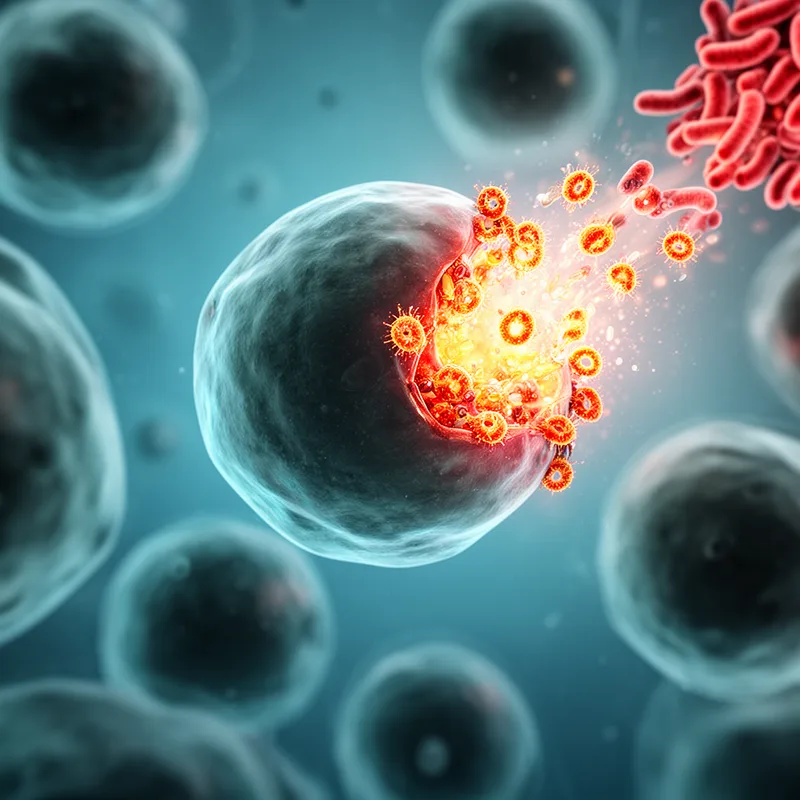
A substance that breaks open animal cells by damaging their cell membrane
- noun
- /ˌsaɪtəˈlaɪsɪn/
- Specialized
:
citolisina
- The bacteria release a cytolysin that destroys nearby animal cells.
Examples
-
Many cytolysins can disrupt cellular membranes.
-
A potent cytolysin can contribute to severe infections by damaging host cells.
-
Scientists studied the effects of the cytolysin on liver tissue cultures.
-
The cytolysin released by the bacteria caused cell damage.
-
The bacteria release a cytolysin that destroys nearby animal cells.
-
A potent cytolysin can contribute to severe infections by damaging host cells.
-
Scientists studied the effects of the cytolysin on liver tissue cultures.
Synonyms


 1
7.9
1
7.9
A substance that kills or damages cells
causes destruction specifically by disrupting membranes rather than general poisoning
9.9
A substance that breaks open cells, like an antibody or enzyme
is limited to animal cells and acts by disrupting membranes
How Destructive
cytolysin
- Specialized

cytotoxin
1
7.9
- Specialized
1
7.9
Surface Forms
cytolysin singular
cytolysins plural
Morphology
Etymology
Cytolysin comes from cyto- meaning 'cell' and -lysin meaning 'to break'. So a cytolysin is a substance that breaks open or destroys animal cells by damaging their membranes.