

cut of meat
 6
2.7
6
2.7

- noun
- /kʌt əv miːt/
- When choosing a roast, I always prefer a cut of meat from the rib section.
Loading YouTube…
Watch on YouTubeSo you may tend to unconsciously pick leaner cuts of meat for your carnivore diet.
- So you may tend to unconsciously pick leaner cuts of meat for your carnivore diet.
- Speaking of meat and how to treat it, what's your favorite cut of meat?
- And so they did a two week nothing but carnivore, which is meat, fatty cuts of meat, egg yolks and butter.
- They had the control group who ate just saturated fat, fatty cuts of meat, butter, egg yolks, all that good stuff.
- You having a little cut of meat, cut of cheese.
Examples
-
When I eat steak, I'm always drawn to the cuts of meat like filet mignon because they are usually really tender.
Blog text (3) -
The butcher recommended a lean cut of meat for making stew.
-
Look at this cut of meat!
-
When I can get a good cut of meat, I roast it for them.
-
A customer went into a butcher shop and asked for a cut of meat.
Academic text (1994) -
To get outstanding results, though, it's best if you select the best possible cut of meat.
Blog text (32) -
Who would get the choicest cuts of meat?
-
Individual cuts of meat vary tremendously in size, quality, initial temperature, and overall response to heat.
Academic text (1999) -
The most common cuts of meat come from the skeletal muscles of animals.
Academic text (1999) -
To ensure a flavorful dish, select a high-quality cut of meat like tenderloin.
Synonyms
 474
1.0
474
1.0
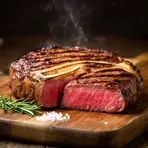
A thick slice of meat, usually beef, that people cook to eat
 288
1.8
288
1.8
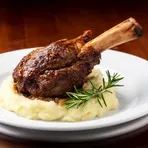
A thick piece of meat with a bone from the rib or loin
 194
1.0
194
1.0
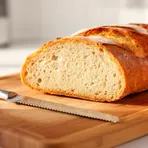
A thin flat piece cut from food like bread or meat
 121
1.4
121
1.4
A cut of meat that includes a bone from the animal's chest
 46
2.1
46
2.1
A piece of meat sliced from an animal for cooking
 44
5.3
44
5.3
A cut of meat from the upper front leg of an animal like a pig
 23
5.3
23
5.3
A cut of meat from where an animal's head joins its body for slow cooking
 18
8.2
18
8.2
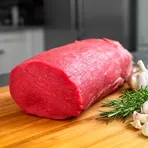
A small, tender piece of meat often served as a special dish
 16
4.3
16
4.3
A cut of meat from an animal's back between the ribs and the rear
 12
3.6
12
3.6
A small thin slice of meat often covered in breadcrumbs and fried
 11
2.9
11
2.9
A cut of beef from the back of the cow often served as a steak
 9
4.6
9
4.6
A cut of meat from the side of an animal, between the ribs and leg
 9
5.8
9
5.8
A cut of meat from the upper part of an animal leg, often from lamb or veal
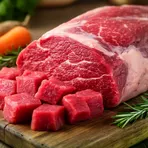 7
7.0
7
7.0
A cut of beef from the front shoulder often used for stews
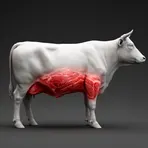 7
8.2
7
8.2
A cut of beef from the lower front part of the cow
 3
3.2
3
3.2
A cut of beef from the loin that is very tender and used for steaks
 3
8.3
3
8.3
The back upper leg area of an animal often used as meat
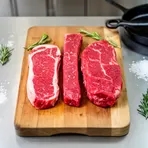 1
2.8
1
2.8
A piece of beef from one part of a cow used for cooking
 1
2.4
1
2.4
Meat cut into small pieces for slow cooking to make it tender


 1
2.5
1
2.5
A piece of meat from a pig sold for cooking, like loin or shoulder
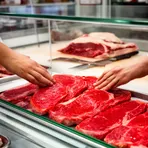 1
2.7
1
2.7
A piece of meat that shops sell soon after they prepare it
 1
9.9
1
9.9
A thin, bony cut of meat from an animal's neck used for slow cooking
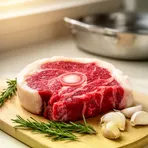
A piece of meat from a lamb that you cook
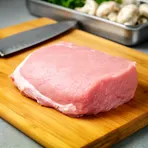
A piece of meat from a young calf for eating
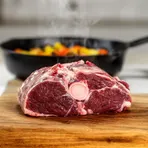
A piece of meat from an adult sheep that people cook and eat

A cut of beef from the cow's back that is tender and tasty
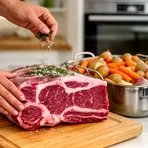
A cut of meat from the shoulder used for roasting

A piece of meat with a lot of fat
How Big

Surface Forms
Morphology
The meaning 'a piece or portion of meat' is directly and transparently derived from the constituents: 'cut' (a portion or slice) combined with 'meat', with 'of' serving as the straightforward linking preposition. This noun + of + noun compositional pattern is cross-linguistically common and follows ordinary English noun phrase formation, so a B1 learner who knows the words would readily understand the MWE.
Etymology
The term cut of meat comes from butchers who cut an animal into parts and sold each piece of meat separately. Each 'cut' is from a different body part and has its own taste and use, so today the phrase means a specific piece of meat from a certain part of the animal.