
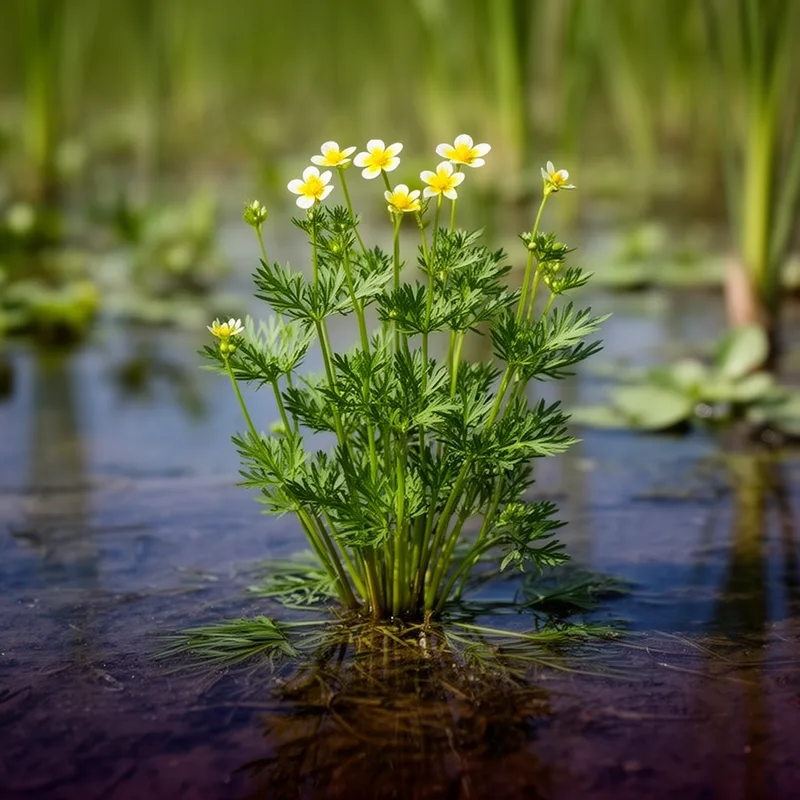
cursed crowfoot
- noun
- The wetland was filled with cursed crowfoot blooming along the water’s edge.
Examples
-
Farmers sometimes regard cursed crowfoot as a troublesome weed in their fields.
-
The cursed crowfoot is often found near ponds.
-
Botanists studied the spread of cursed crowfoot in the marshland ecosystem.
-
Many gardeners dislike the cursed crowfoot for its invasive nature.
-
The wetland was filled with cursed crowfoot blooming along the water’s edge.
-
Farmers sometimes regard cursed crowfoot as a troublesome weed in their fields.
-
Botanists studied the spread of cursed crowfoot in the marshland ecosystem.
Synonyms

A plant with leaves like celery and bright yellow flowers that grows in wet places
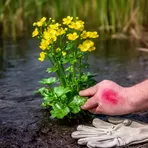
A yearly buttercup that grows in wet places and can cause skin irritation
Surface Forms
Morphology
This is a straightforward adjective + noun composition: a B1 learner who knows 'cursed' and 'crowfoot' will readily infer it denotes a kind or variety of crowfoot (i.e., a plant) described as 'cursed' or negatively marked. While the precise botanical details (annual habit, marshy habitat) are not fully specified by the words, the referential meaning 'a type of crowfoot plant' is directly derivable from the constituents.
Etymology
Cursed crowfoot gets its name from the plant's look and its bad reputation: the small, split leaves look like a bird's foot, so people called it crowfoot, and farmers added cursed because it spreads fast in wet fields and is hard to remove. That's why the name now describes an annual marsh herb often seen as a 'troublesome weed'.

