
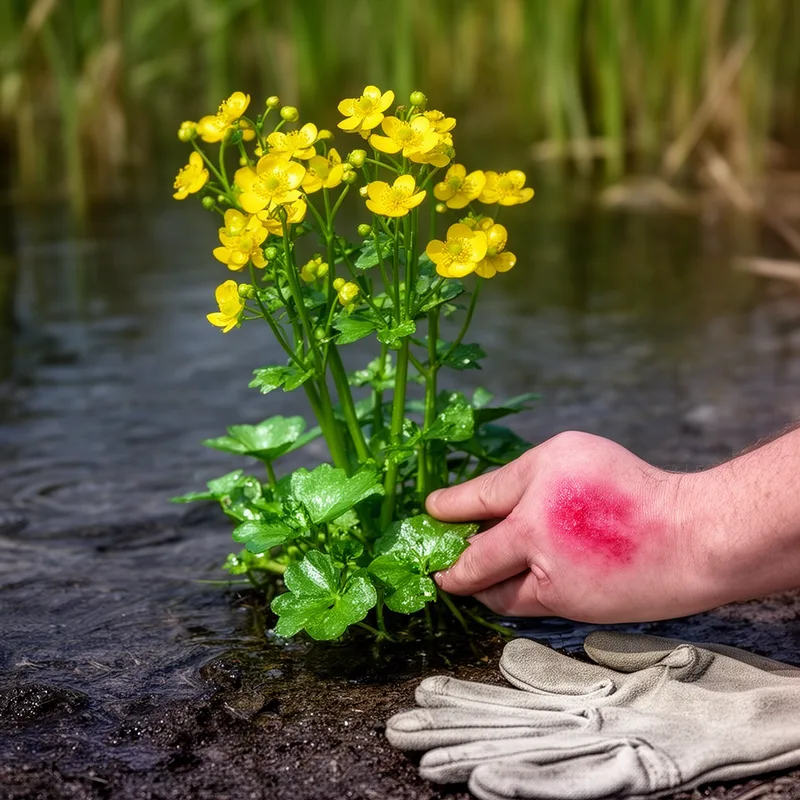
Ranunculus sceleratus
- noun
- Specialized
- Ranunculus sceleratus is a highly toxic plant that grows in marshy areas and can be harmful if ingested.
Examples
-
The leaves of Ranunculus sceleratus can cause skin irritation if handled without protection.
-
Botanists identified the unusual plant as Ranunculus sceleratus during their wetland survey.
-
Ranunculus sceleratus is commonly found around pond edges and in marshy environments.
-
The Ranunculus sceleratus thrives in wetland environments.
-
Have you ever seen a Ranunculus sceleratus in bloom?
-
The Ranunculus sceleratus thrives in wet conditions, often found in wetlands and near water bodies.
-
Gardeners should be cautious when handling Ranunculus sceleratus due to its potential to irritate the skin.
Synonyms

A plant with leaves like celery and bright yellow flowers that grows in wet places
Surface Forms
Morphology
Ranunculus + sceleratus
The binomial is compositionally informative in that a learner who knows 'Ranunculus' will recognise it as a species of buttercup, so genus membership is transparent. However, the specific epithet 'sceleratus' is a Latin form whose detailed implications (annual habit, marshy habitat, toxicity) are not predictable from everyday English vocabulary, making the full botanical meaning only partially inferable.
Etymology
Ranunculus sceleratus comes from old Latin words. The part ranunculus means 'little frog' because these buttercups grow in wet places like where frogs live, and sceleratus means 'wicked' or 'cursed' to show the plant is poisonous and can irritate the skin.

