

cuneiform bone
- noun
- /ˈkjuːnɪfɔrm boʊn/
- Specialized
- The doctor explained that the fracture was in the cuneiform bone of the patient's wrist.
Examples
-
X-rays revealed that her cuneiform bone was not aligned correctly after the fall.
-
In anatomy class, we studied the position of the cuneiform bone relative to the other carpal bones.
-
The cuneiform bone is essential for wrist movement.
-
She fractured her cuneiform bones during the game.
-
In anatomy class, we studied the position of the cuneiform bone relative to the other carpal bones.
-
The doctor explained that the fracture was in the cuneiform bone of the patient's wrist.
-
X-rays revealed that her cuneiform bone was not aligned correctly after the fall.
Synonyms


 1
9.9
1
9.9
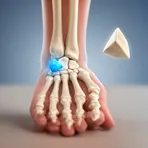
A small three-sided bone in the wrist near the little finger
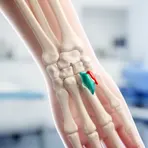
A small bone in the wrist near the little finger that connects to other wrist bones

Small wrist bone on the little-finger side that connects to the pisiform, hamate and lunate bones

A small wrist bone on the little finger side next to the lunate and pisiform bones

A small bone in the wrist that connects to the pisiform, hamate, and lunate bones
Surface Forms
Morphology
The noun phrase is a straightforward adjective+noun composition meaning 'a bone that is cuneiform (wedge-shaped)', so a learner who knows 'cuneiform' and 'bone' can infer it refers to a wedge-shaped bone. Although it denotes a specific carpal bone in anatomical terminology (triquetral), that specialized reference does not obscure the transparent modifier+noun meaning.
Etymology
Cuneiform bone gets its name from cuneiform, a word from old Latin that means 'wedge'. Because this small bone in the wrist looks like a little 'wedge' or triangle, the name came to be used for that specific wrist bone.