

crustose
- adjective
- /ˈkrʌstoʊs/
- Specialized
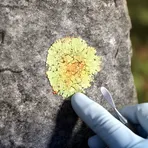
- The scientist studied the crustose lichen, fascinated by how its thin layer securely adhered to the rocky surface.
Examples
-
Yet I found Central California's crustose lichen species, clinging to slate rock formations, to be the most striking and colorful.
Academic text (2000) -
The crustose lichen covered the old stone wall, creating a textured surface that blended with the natural environment.
-
When hiking in the forest, I noticed many crustose lichens growing on the trunks of trees, giving them a unique appearance.
Synonyms

 14
2.5
14
2.5

Having a hard, crisp outer layer like the top of bread
 1
4.2
1
4.2
Covered with a hard layer on the surface

Having a hard outer layer like the top of bread or rock

Covered by a hard dry outer layer
Antonyms


Compounds
How Crusty


Surface Forms
Morphology
Etymology
Crustose comes from the Latin crusta and the ending -ose; crusta means 'crust' (think of the hard outside of bread or the Earth's crust) and -ose means 'full of'. So crustose lichens make a thin, crust-like layer that sticks very closely to the surface, and the word names exactly how they look and behave.