
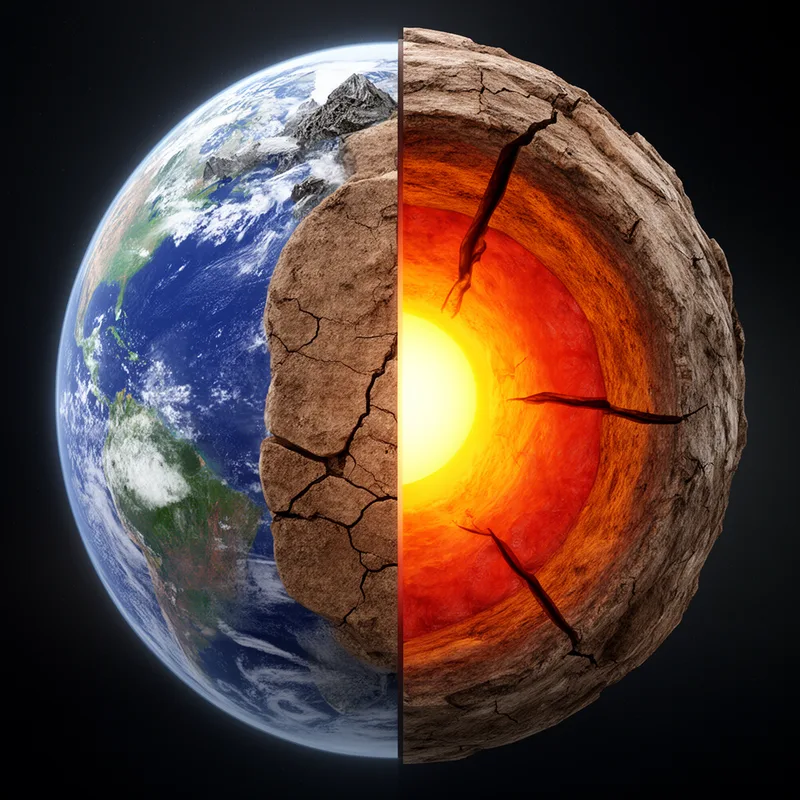
crustal
 1
8.4
1
8.4

- adjective
- /ˈkrʌstl/
- Specialized
- Volcanism was either induced by the impact itself, or later volcanism seeped through the crustal fractures that the impact created.
- crustal plate
- crustal rock
- crustal thickening
Examples
-
Volcanism and shifting crustal plates regulate atmospheric gases and the climate.
-
In other areas, the opposite process occurs, as cold crustal rocks are dragged down into the mantle and recycled.
Academic text (1993) -
So some asteroids are made of crustal material, others are made of core material.
-
Pressure cooks much of it into sandstone, as one crustal plate slides over another like a hand.
Academic text (1998) -
Crustal compression piles these mountains up to such a bulk that their own weight pulls them apart.
Academic text (1991) -
This caused crustal fracturing that produced large thrust or reverse faults known as lobate scarps.
Academic text (2007) -
Most of the planet's volcanoes smoldered where the edges of great crustal plates met gratingly or rode up over each other, as along this great ocean's famous Ring of Fire.
Fiction book (1990) -
Although volcanism was clearly evident in the peaks and lava flows that make up much of the province, some researchers speculated that uplift and crustal buckling could also have played a role in the region's formation.
Academic text (1999) -
The evidence that Mars used to have a magnetic field lies in the crustal rocks.
-
Hydrothermal vents form where Earth's crustal plates are gradually spreading apart.
Synonyms
 18
7.2
18
7.2
Relating to the movement and shape of the Earth's crust that cause earthquakes and mountains
Compounds
- Specialized
Movement of the Earth's top rock layer that changes the land and causes earthquakes
Surface Forms
Morphology
Etymology
The word crustal comes from the simple word crust, from the old Latin crusta meaning 'rind' or 'shell'. So crustal describes the Earth's outer 'shell' or layer, just like the hard crust on a loaf of bread.