
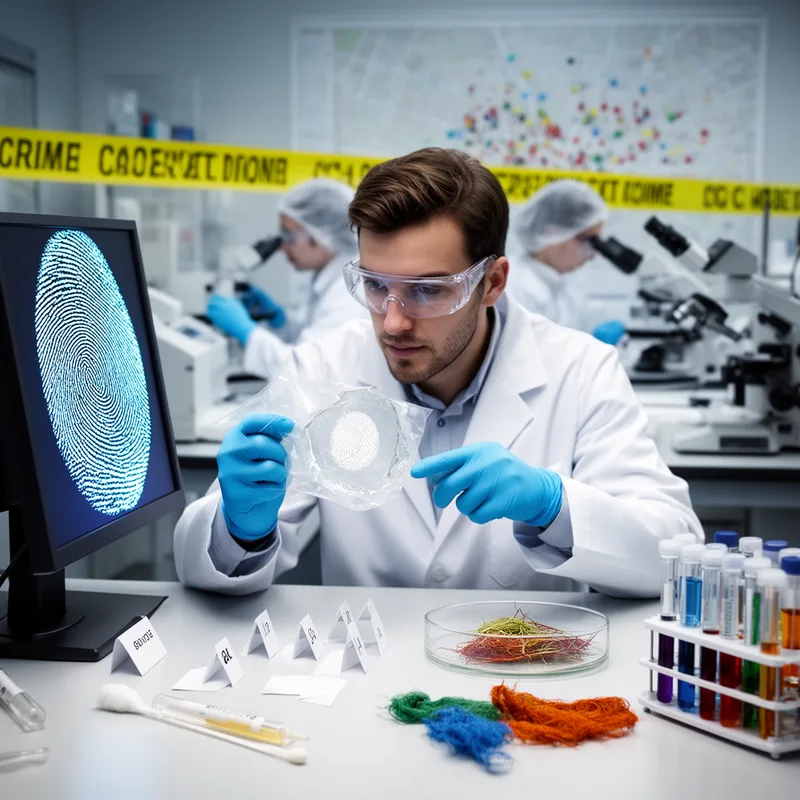
criminalistics
 1
7.5
1
7.5

- noun
- /ˌkrɪmɪnəˈlɪstɪks/
- Specialized
- The detective relied on criminalistics to analyze the DNA evidence found at the crime scene.
Loading YouTube…
Watch on YouTubeWe have one of the first principles of criminalistics is Locard's theory of transference.
- We have one of the first principles of criminalistics is Locard's theory of transference.
- So those disciplines we work with at BU and we also teach crime scene in a lot of general criminalistics.
Examples
-
But an Aug. 10, 1984, internal OSBI "Criminalistics Examination Report" written and signed by OSBI investigator Ann Reed shows that Siler, not Peters, handed the earring over to the bureau for examination, and not on July 6, but July 18.
Academic text (1993) -
We have one of the first principles of criminalistics is Locard's theory of transference.
-
Criminalistics, University of Colorado at Denver.
Fiction book (1993) -
A nonfiction hook on criminalistics will be out this fall.
Academic text (2009) -
"And you got the career, I mean, like, Chief of Criminalistics even in a jerkwater place like Jeff County, that's not too shabby, Rainey."
Fiction book (1997) -
A guy from County Criminalistics was dusting around the tellers' stations and over around the front of the vault, although what he thought he'd find was a mystery to me.
Fiction book (1998) -
Studying criminalistics has helped her understand how forensic science contributes to solving cases.
-
At the university, he enrolled in a course about criminalistics to learn more about forensic techniques.
Synonyms
 150
3.9
150
3.9
Work that uses science to investigate crimes
Surface Forms
Morphology
criminalistics = criminalistic (semi-transparent) = criminal + istic + s
Forming the noun from the adjective 'criminalistic' by adding '-s' (as in 'linguistic' -> 'linguistics') is a regular and recognizable step.
Etymology
The word criminalistics joins criminal ('relating to crime') and the ending -istics ('the study of'), like in statistics or linguistics. So, criminalistics is the scientific study of physical evidence, like fingerprints and DNA, to help solve crimes.