

creeping thyme
- noun
- /ˈkripɪŋ θaɪm/
- She's also had good luck with Montauk daisies, butterfly bushes, lilacs, lavender, and creeping thyme.
Examples
-
Creeping thyme is an excellent choice for filling in gaps in your garden where other plants struggle to grow.
-
And it's planted in all the daintiest little low ground covers, creeping flocks and creeping thyme and little sedums and stuff.
-
In my garden, I have planted creeping thyme as a vibrant ground cover that attracts bees and butterflies.
-
The purple flowers of creeping thyme bloom beautifully in spring, adding color to any landscape.
Synonyms


 1
6.1
1
6.1
A small plant with purple flowers that smells nice and is used in cooking
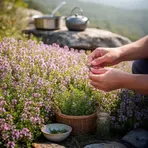
A low, spreading plant with a strong smell used to cover ground and for cooking or medicine

A low, fragrant plant with small purple and white flowers that grows close to the ground
Surface Forms
Morphology
The phrase is transparently compositional: 'creeping' (spreading/low-growing) modifies 'thyme' (the herb), so a B1 learner who knows both words can infer it denotes a low, spreading variety of thyme used as groundcover. The present‑participle + noun pattern directly signals growth habit and is cross‑linguistically common, making the meaning predictable from its parts.
Etymology
Creeping thyme is named because its creeping stems spread across the ground and make a low, soft carpet, and thyme is a small fragrant herb. Gardeners use it as 'ground cover', so the name shows it is a low, spreading thyme that smells nice.