

cotyloid joint
- noun
- Specialized
- The hip is a classic example of a cotyloid joint, enabling a wide range of movement.
Examples
-
Anatomists classify the shoulder as a cotyloid joint due to its cup-and-ball structure.
-
The cotyloid joint allows for a wide range of motion.
-
Damage to the cotyloid joint may severely limit an individual's mobility.
-
She has a cotyloid joint in her shoulder.
-
The hip is a classic example of a cotyloid joint, enabling a wide range of movement.
-
Anatomists classify the shoulder as a cotyloid joint due to its cup-and-ball structure.
-
Damage to the cotyloid joint may severely limit an individual's mobility.
Synonyms


 1
4.1
1
4.1
A joint where a round bone end fits into a cup, allowing movement in many directions

A joint where a rounded bone fits into a cup-shaped socket to move in many directions like the hip

A joint where a rounded bone end fits into a cup in another bone, like the hip or shoulder

A joint where a round bone end fits in a cup, letting movement in all directions
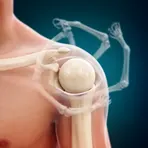
A joint where a round bone head fits into a cup-like socket to move in many directions
Surface Forms
Morphology
The meaning is directly composed from 'cotyloid' (cup-shaped joint cavity) and 'joint' (a point where bones articulate), so a learner who knows both constituents can infer a joint with a cup-like socket. This is a transparent, straightforward anatomical composition and corresponds to a common cross-linguistic concept (ball-and-socket type), making it comprehensible to a B1 learner.
Etymology
Cotyloid joint pictures a 'cup-and-ball' fit: the round head of one bone sits inside a cup-like socket. The word cotyloid may come from an old Greek word for 'cup', so the name helps you remember that this joint lets a bone move in many directions.