

cotton grass
- noun
- /ˈkɑtən ɡræs/
- UK
 :
hierba de algodón
:
hierba de algodón
- In the spring, the fields were filled with cotton grass, creating a beautiful white landscape.
Examples
-
Later, trodden down, the water of the marshes will rise, seep in, and the cotton grass will creep upwards.
Academic text (2007) -
A mundane, four-mile walk across moorland is like walking in some barren lunar landscape, but instead of dust and rocks, it is dotted with wild orchids, cotton grass, and heather.
Blog text (12) -
Caribou migrate to the coastal plain every year to feed on the nutritious cotton grass.
-
As we walked through the bog, we admired the delicate cotton grass swaying in the breeze.
Synonyms

A grass-like plant with soft white tufts that grows in wet bogs
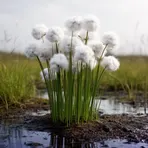
A plant that grows in bogs with white fluffy flower heads
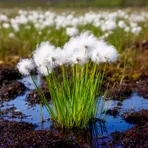
A plant with white cottony tufts that grows in wet, boggy ground

A plant that grows in bogs with white fluffy seed heads
Surface Forms
Morphology
The noun-noun composition 'cotton grass' is directly interpretable as a grass-like plant that has cotton-like (fluffy) fibers, so a learner who knows 'cotton' and 'grass' can infer the basic meaning. This follows a common cross-linguistic compounding pattern for describing plants and therefore is immediately comprehensible at B1 even if the precise botanical details are unknown.
Etymology
Cotton grass gets its name from how the plant looks: the tops have soft, white tufts that look like bits of cotton on a low grass-like plant in bogs. So the name now means the 'bog plant' with cotton-like tufts.

