

Eriophorum angustifolium
- noun
- Specialized
- The distinctive cottony heads of Eriophorum angustifolium make it easily recognizable in marshy landscapes.
Examples
-
The wetlands were dotted with Eriophorum angustifolium, their white tufts swaying in the breeze.
-
The Eriophorum angustifolium thrives in wet, acidic soils.
-
Botanists identified the plant as Eriophorum angustifolium during their survey of the bog.
-
I saw Eriophorum angustifolium blooming in the marsh.
-
The wetlands were dotted with Eriophorum angustifolium, their white tufts swaying in the breeze.
-
The distinctive cottony heads of Eriophorum angustifolium make it easily recognizable in marshy landscapes.
-
Botanists identified the plant as Eriophorum angustifolium during their survey of the bog.
Synonyms

A plant that grows in bogs with white fluffy seed heads
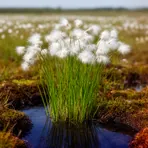
A plant that grows in bogs with soft white tufts on its stems

A plant that grows in bogs with white fluffy flower heads

A grass-like plant with soft white tufts that grows in wet bogs
Surface Forms
Morphology
Eriophorum + angustifolium
This is a scientific Latin binomial: the first element names the genus (Eriophorum, a wetland plant with fluffy seed heads) and the second is a species epithet. If a learner truly knew both constituents (including the Latin epithet, which is missing here but literally means ‘narrow‑leaved’), they could infer it denotes a particular kind of Eriophorum, but the specialized taxonomic/Latin form and the missing constituent definition make the meaning only partially derivable for an average B1 learner.
Etymology
Eriophorum angustifolium may come from old words meaning 'wool' and 'narrow leaf'. Eriophorum points to the plant's white, cotton-like flower heads and angustifolium to its thin leaves, so the name gives a simple picture of this cottongrass in bogs.

