
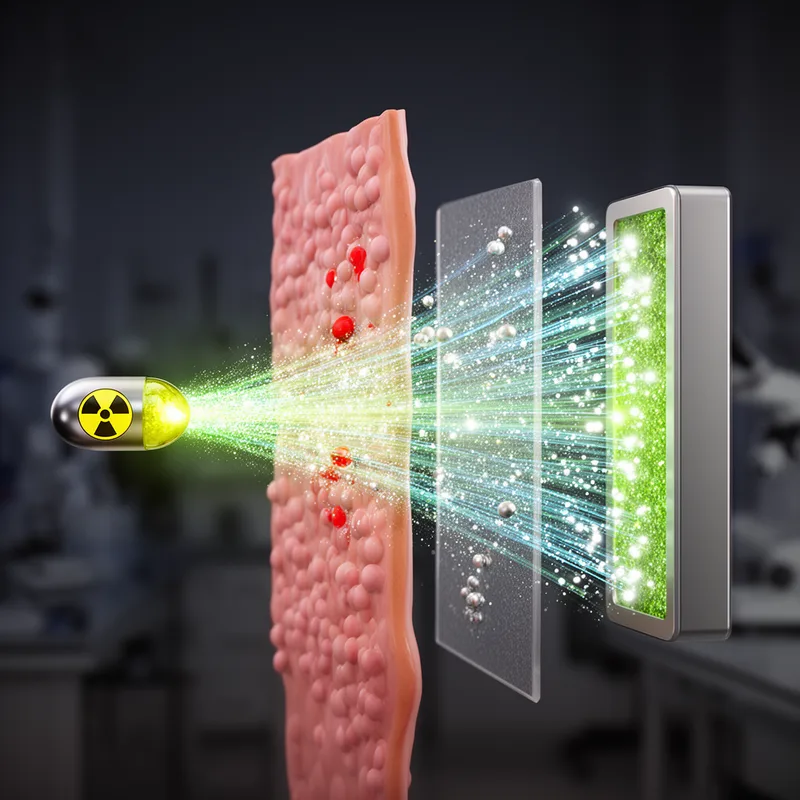
corpuscular radiation
- noun
- /ˈkɔrpəsˌkʌlɚ reɪˈdeɪʃən/
- Archaic
- Exposure to corpuscular radiation can damage living tissue at the cellular level.
Examples
-
Scientists use sensitive detectors to measure corpuscular radiation emitted by certain radioactive materials.
-
Nuclear reactors are a significant source of corpuscular radiation in controlled environments.
-
The study focused on corpuscular radiation emitted by stars.
-
Scientists are investigating corpuscular radiation from supernovae.
-
Exposure to corpuscular radiation can damage living tissue at the cellular level.
-
Nuclear reactors are a significant source of corpuscular radiation in controlled environments.
-
Scientists use sensitive detectors to measure corpuscular radiation emitted by certain radioactive materials.
Synonyms

 438
4.5
438
4.5

Energy that comes out as rays or waves, like sunlight

 1
8.1
1
8.1
A stream of very small bits of matter, like atoms, that carries energy and can pass through things
Surface Forms
Morphology
The adjective 'corpuscular' (relating to small particles) directly modifies 'radiation' (energy emitted as rays, waves, or particles), so the meaning 'radiation composed of particles' is a straightforward compositional inference. Although the phrase is technical, its modifier+noun structure and direct relation between constituents make the meaning predictable for learners who know both words.
Etymology
Corpuscular radiation The name corpuscular radiation comes from corpuscular, a word that means 'small bodies', and radiation, so it paints the image of a flow of tiny particles. So it means radiation made of 'particles' rather than 'waves'.